
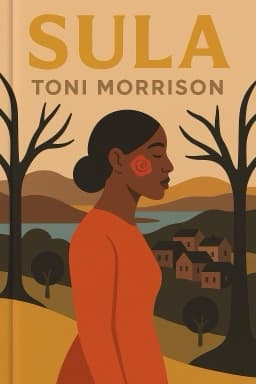
Why ‘Sula’ Is More Relevant Today Than Ever: Friendship, Freedom, and the Fight Against Social Norms
Exploring how Morrison’s portrayal of friendship and freedom challenges societal expectations and resonates with modern struggles.

At its core, Toni Morrison’s Sula is a powerful exploration of friendship and the quest for freedom within a society that demands conformity. The relationship between Sula Peace and Nel Wright is fraught with love, betrayal, and the struggle to define oneself beyond imposed roles.
In a world that often punishes difference, Morrison’s novel shines a light on the courage required to be oneself. Sula’s declaration, “I don’t want to make somebody else. I want to make myself,” resonates deeply in an era where individual identity is both celebrated and contested. Nel’s contrasting path of marriage and domesticity reveals the compromises many make to gain social acceptance and stability.
The novel also challenges simplistic notions of morality. Sula is neither villain nor saint; she embodies freedom that frightens those who have never tasted it. This moral ambiguity invites readers to reconsider how society labels and judges those who deviate from norms.
Moreover, the story’s setting in the Bottom—a community grappling with economic hardship and racial marginalization—adds layers of complexity. Here, freedom is not just personal but collective, intertwined with history, race, and social structures. The rituals, conflicts, and changes within the community mirror struggles still relevant today.
In revisiting Sula, we find a narrative that speaks to the heart of contemporary debates on feminism, identity, and resistance. Morrison’s portrayal of friendship as both a source of strength and conflict offers profound insights into human relationships and societal pressures.
As we navigate our own times, the lessons from Sula encourage us to embrace complexity, celebrate courage, and support those who dare to live authentically.
References: Drawing on critical essays and feminist readings of Sula from various literary sources 1 , 4 , 2 .
Want to explore more insights from this book?
Read the full book summary