
Article from Book Summary
5 Brain Myths That Are Holding You Back—And How to Break Free
Science and stories from 'Super Brain' that will change everything you thought you knew about your mind.

Omar Khalil
August 7, 2025438 views
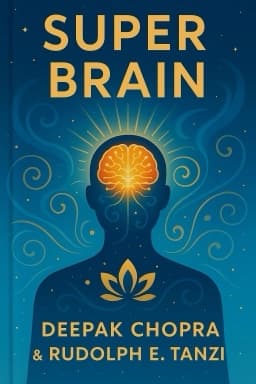
Super Brain: Unleashing the Explosive Power of Your Mind to Maximize Health, Happiness, and Spiritual Well-BeingDeepak Chopra and Rudolph E. Tanzi
Science and stories from 'Super Brain' that will change everything you thought you knew about your mind.
For generations, we’ve been told that the brain is a rigid, aging organ—doomed to decline, unable to heal, and ruled by primitive instincts. But what if these are just myths? 'Super Brain' by Deepak Chopra and Rudolph E. Tanzi, along with the latest neuroscience, reveals a far more hopeful and empowering truth.
- Myth 1: The Brain Can’t Heal After Injury
Fact: The brain is remarkably resilient. After trauma, neighboring neurons can form new connections and restore lost functions. Stroke survivors relearning to walk and speak are living proof. - Myth 2: You Lose Brain Cells Forever
Fact: Neurogenesis—the birth of new brain cells—continues throughout life, especially in areas related to memory and learning. Simple activities like exercise and learning something new can spark this growth. - Myth 3: Aging Means Inevitable Decline
Fact: The brain can stay sharp, creative, and joyful well into old age. Older adults who stay mentally and socially active often outperform their younger peers in some cognitive tasks. - Myth 4: Emotions Control Us
Fact: While emotions are powerful, your higher brain gives you the power to reflect, choose, and rise above automatic reactions. Mindful awareness can shift even the most stubborn emotional patterns. - Myth 5: You’re Stuck with Your Genetics
Fact: Genes are not destiny. Lifestyle, mindset, and environment play a huge role in shaping your brain’s structure and function. Epigenetics shows that you can turn genes on or off with your choices.
Ready to break free? Start by challenging limiting beliefs, nurturing your brain with curiosity, and seeking out new experiences. The science is clear: you are the architect of your own mind.
References:
1
,
3
Want to explore more insights from this book?
Read the full book summary