
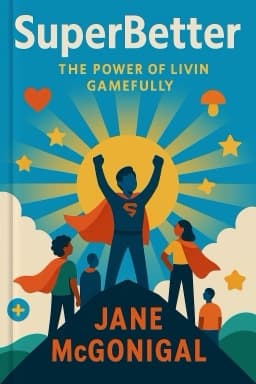
The SuperBetter Science: Why Games Make Us Resilient (and How to Hack Your Brain for Good)
Unlock the Neuroscience Behind Gameful Living and Transform Your Mindset Forever

Can playing a game really change your brain—and your life?
According to Jane McGonigal’s SuperBetter and a growing body of research, the answer is a resounding yes. The book reveals that when we approach life’s challenges as games, our brains respond in powerful ways. Dopamine, the neurotransmitter linked to motivation and learning, surges whenever we complete a quest or power-up. This chemical boost makes us more likely to persist, try new strategies, and bounce back after failure.
The ‘spotlight theory of attention’ is central to SuperBetter. By focusing your mental spotlight on engaging tasks, you can block pain, anxiety, and cravings. Clinical trials show that burn patients playing immersive VR games reported 50% less pain than those on morphine. After trauma, playing Tetris for just ten minutes can halve the number of distressing flashbacks, acting as a ‘cognitive vaccine’ against PTSD. Even casual games like Candy Crush help reduce cravings by 25%.
But the science goes deeper. Games also foster flow—a state of deep engagement that blocks negative emotions and boosts creativity. Whether you’re solving puzzles, dancing, or simply counting breaths, these moments of flow help you heal, grow, and adapt. The SuperBetter method leverages these insights, offering practical ways to train your brain for resilience and optimism.
The takeaway? You don’t have to be a gamer to benefit. By adopting a gameful mindset—setting quests, collecting power-ups, and celebrating progress—you can rewire your brain for good. The science is clear: living SuperBetter is a proven path to mental and emotional strength. 3 4
Want to explore more insights from this book?
Read the full book summary