
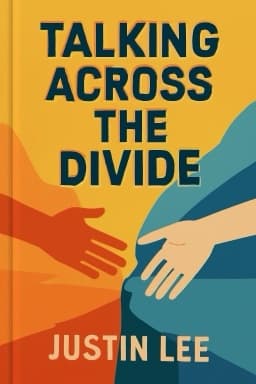
Are We Living in Separate Realities? The Hidden Truth About Echo Chambers and Polarization
Discover how modern technology and human psychology create invisible walls that divide us, and what we can do to break free.

In today's hyperconnected world, it often feels like we are living in separate realities. Our social media feeds, news sources, and even conversations seem to echo our own beliefs back to us, reinforcing divisions and deepening polarization. But what exactly are echo chambers and filter bubbles, and how much do they contribute to this growing divide?
Understanding Echo Chambers and Filter Bubbles
Echo chambers are social environments—both online and offline—where individuals primarily encounter opinions and information that reflect their own beliefs. Filter bubbles, a related concept, refer to the algorithmic personalization of content, where platforms tailor information to users based on their past behavior. Together, these phenomena create personalized realities that limit exposure to differing viewpoints.
Surprisingly, recent research suggests that echo chambers may be less widespread than popularly assumed. A comprehensive literature review from the Reuters Institute found that while personalization and selective exposure exist, many people still encounter diverse perspectives in their networks and media consumption. This challenges the narrative that we are completely isolated in ideological bubbles.
However, the impact of these dynamics cannot be underestimated. When people preferentially connect with like-minded individuals, group polarization occurs—where opinions become more extreme within homogeneous groups. This intensifies political and cultural divides, making dialogue across differences increasingly difficult.
The Psychological Barriers Deepening Divides
Beyond technology, human psychology plays a crucial role. Ego protection leads individuals to resist admitting mistakes or changing views, while team loyalty causes allegiance to group beliefs over objective facts. Comfort with familiar ideas and misinformation further entrench divisions. These barriers create invisible walls that separate us even when we share physical spaces.
Recognizing these barriers is the first step toward bridging divides. It requires humility to acknowledge our own biases and courage to engage with those who think differently.
Introducing Strategic Dialogue: The Fourth Tool
Traditional responses to conflict—fight, flight, or compromise—often fail to resolve deep divisions. Strategic dialogue offers a fourth tool: intentional, empathetic communication that breaks down barriers through preparation, listening, and storytelling.
This approach encourages sincere engagement, lowering defenses and fostering understanding. For example, rather than debating facts, sharing personal stories can humanize perspectives and create emotional connections. Listening attentively without planning rebuttals opens doors to new insights and mutual respect.
Why This Matters
In an era where misinformation spreads rapidly and polarization threatens social cohesion, understanding the mechanisms behind our divisions empowers us to act. By combining insights from social science research and practical communication strategies, we can begin to dismantle echo chambers and build bridges across differences.
Ultimately, the hope lies in individual and collective efforts to engage meaningfully, listen deeply, and share authentically. The journey toward connection starts with one conversation at a time.
For more on how to prepare for these conversations, listen strategically, and share your story effectively, stay tuned for our upcoming blogs in this series.
Sources: Reuters Institute Literature Review on Echo Chambers 1 , Princeton Research on Political Polarization 2 , Number Analytics on Digital Media Polarization 3
Want to explore more insights from this book?
Read the full book summary