
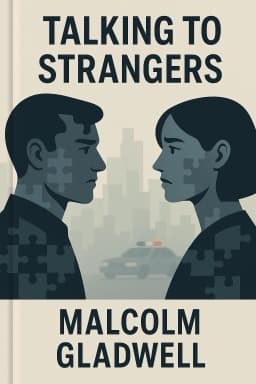
Trust, Lies, and the Cost of Misjudgment: What 'Talking to Strangers' Teaches Us About Human Nature
How Our Instincts to Trust—and Our Blind Spots—Shape the World

Why do we so often fail to detect lies, even when the stakes are high? Malcolm Gladwell’s 'Talking to Strangers' explores the paradox at the heart of human society: trust is both our greatest strength and our most dangerous vulnerability. Through gripping stories—like the double-agent scandals that rocked the intelligence community, or the decades-long Ponzi scheme of Bernie Madoff—Gladwell reveals how our instinct to trust is built into our psychology. This 'truth-default theory' means we believe others by default, only shifting to suspicion when the evidence becomes impossible to ignore.
But why do we trust so easily? Gladwell argues that trust is the foundation of civilization. Without it, every transaction would grind to a halt, every conversation would be fraught with suspicion, and progress would be impossible. Yet this same instinct leaves us open to manipulation and betrayal. The rare individuals who refuse to default to truth—whistleblowers and skeptics—are often ostracized or ignored, even when they are right. Their stories, woven throughout the book, serve as both cautionary tales and reminders of the high social cost of constant suspicion.
Gladwell also explores the limits of our ability to detect deception. Research shows that even experienced judges, police officers, and intelligence agents are no better than chance at spotting lies. The cues we rely on—nervousness, eye contact, confidence—are unreliable, and often lead us astray. The book’s most sobering message is that there is no easy fix: we can’t simply train ourselves to be better lie detectors. Instead, we must accept the risks of trust, while building systems that catch deception before it causes harm.
Ultimately, Gladwell’s book is a meditation on the cost of misjudgment. From ruined careers to lost lives, the consequences of misplaced trust are real and lasting. But so too are the benefits of a society built on openness and goodwill. The challenge is to strike a balance—to trust with our eyes open, to listen with humility, and to approach every stranger as both a potential friend and a potential risk. In a world where the line between truth and deception is often blurred, Gladwell’s insights offer a roadmap for navigating the complexities of human connection.
Want to explore more insights from this book?
Read the full book summary