
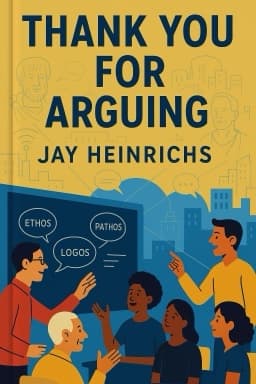
7 Rhetorical Hacks from 'Thank You for Arguing' That Will Change Your Life (and Win Your Next Family Debate)
Unlock the ancient secrets of persuasion—at home, at work, and even in your own head.

Imagine if every disagreement—at home, at work, or even online—could be transformed from a source of stress into an opportunity for connection and growth. That’s the promise at the heart of Jay Heinrichs’ 'Thank You for Arguing,' a witty, wise, and deeply practical guide to the art of persuasion. In this blog, we’ll explore seven essential techniques—rhetorical hacks—that can turn you into a more persuasive, likable, and effective communicator, whether you’re arguing with a teenager, negotiating a salary, or just trying to get your partner to try a new restaurant.
1. Switch to the Future Tense
Most arguments get stuck in the past (who’s to blame) or the present (who’s right). Heinrichs reveals the secret: shift the conversation to the future—what should we do next? This simple move unlocks solutions and ends deadlock. Next time you’re stuck, ask, ‘How can we make sure this doesn’t happen again?’
2. Master the Three Appeals: Ethos, Pathos, Logos
Persuasion isn’t just about being right. It’s about being trusted (ethos), appealing to emotion (pathos), and making sense (logos). Blend all three for maximum impact. For example, share a personal story (pathos), cite a relevant fact (logos), and show your reliability (ethos)—and watch your influence soar.
3. Let Others 'Win'—But Guide the Outcome
The best persuaders know how to give up small points to win big. Concede gracefully, then gently steer the conversation toward your goal. This rhetorical jujitsu builds goodwill and often gets you what you wanted in the first place.
4. Use Decorum: Fit In to Stand Out
People trust those who seem like 'one of us.' Adapt your tone, language, and even dress to match your audience. Whether you’re at a board meeting or a backyard barbecue, a little decorum goes a long way.
5. Build Trust with Small Acts
Trust isn’t declared—it’s earned. Be consistent, admit mistakes, and show up for others. Over time, these small signals build the kind of ethos that makes people want to listen and follow your lead.
6. Harness the Power of Concession
Sometimes, agreeing with your opponent can be your strongest move. By conceding a point, you can redirect the conversation and open the door to real solutions.
7. Self-Persuasion: Use Rhetoric on Yourself
We’re not just persuading others—we’re constantly persuading ourselves. Use the tools of rhetoric to guide your own decisions, calm your fears, and motivate positive change.
Conclusion: The Gentle Power of Arguments
With these seven hacks, you’ll find that arguments don’t have to be battles—they can be bridges. Whether you’re seeking peace at home, success at work, or simply a better relationship with yourself, the gentle power of rhetoric is yours to use, every single day.
Want to explore more insights from this book?
Read the full book summary