
Unlocking Influence: 7 Communication Laws That Will Change How You Lead
Essential Laws to Transform Your Message and Multiply Your Impact

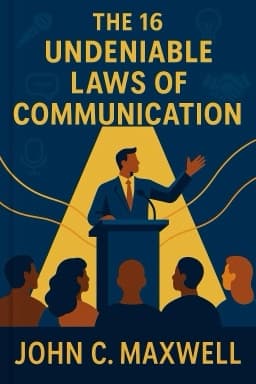
Imagine stepping onto a stage, your heart pounding, and sensing your words ripple through a crowd—leaving not just applause, but real change. That’s the power of authentic communication, and it’s at the core of John C. Maxwell’s 'The 16 Undeniable Laws of Communication.' In this guide, we’ll explore seven of the most powerful laws, each one a stepping stone to greater influence and impact.
First, let’s talk about authenticity. Maxwell argues—and countless studies confirm—that people crave realness, not perfection. Audiences connect with speakers who share their failures as openly as their successes. Authenticity is magnetic; it draws people in and builds trust faster than polished rhetoric ever could. Think of the leaders you remember most: often, they’re the ones who let their guard down, who told stories about their own struggles, and who made you feel like you were part of their journey.
Next comes the law of preparation. Behind every seamless speech or moving conversation lies hours of unseen work: researching, outlining, rehearsing, and reflecting. Maxwell insists that you cannot deliver what you haven’t developed. The world’s best communicators—think TED speakers, top CEOs, or your favorite teacher—spend more time preparing than performing. They rehearse in front of mirrors, record themselves, and ask for feedback from trusted friends. This discipline transforms raw ideas into messages that stick.
But preparation isn’t just about content; it’s also about self. The most memorable communicators align their message with their values, ensuring that every word rings true. This alignment creates a resonance that audiences can sense, even if they can’t describe it.
Now, let’s look at storytelling. Maxwell and communication science agree: people remember stories far longer than they remember facts. Stories bypass the rational mind and speak directly to the heart. Whether you’re inspiring a team or teaching a lesson, wrap your key points in narrative. Use personal anecdotes, metaphors, or parables to bring your message to life. For example, a leader who shares how they overcame a setback will have a far greater impact than one who simply lists their achievements.
Another law is the power of observation. Maxwell recommends studying great communicators across fields: comedians for timing, preachers for passion, news anchors for clarity. By observing a variety of styles, you can borrow techniques that fit your own voice. The best communicators are lifelong students, always learning from those who inspire them.
Collaboration is also crucial. Maxwell’s research shows that the best ideas are rarely born in isolation. Invite others into your process—brainstorm, debate, and seek honest feedback. This not only sharpens your message but also reveals blind spots you might miss alone.
Finally, connection is the golden thread that runs through every law. It’s not enough to be heard; you must be felt. Connection happens when you’re fully present, when you listen as much as you speak, and when you show genuine care for your audience. Charisma isn’t magic—it’s the result of warmth, confidence, and attentiveness.
As you apply these laws, remember: every conversation is an opportunity to add value. Whether you’re leading a meeting or comforting a friend, your words can heal, inspire, and transform. Start with authenticity, prepare with intention, tell stories that matter, learn from others, collaborate boldly, and, above all, connect with heart.
For a deeper dive into these principles and more, check out Maxwell’s full book or summaries on trusted sites like Blinkist and SoBrief. Master these laws, and you won’t just speak—you’ll lead, inspire, and leave a legacy that endures.
1
2
4
Want to explore more insights from this book?
Read the full book summary