
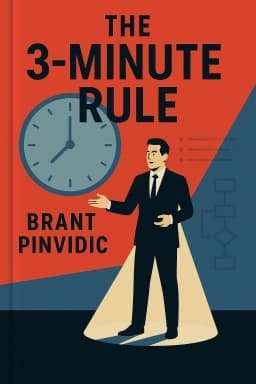
Why You Only Have 3 Minutes to Win: The Secret Behind The 3-Minute Rule
Unlock the power of brevity and clarity to transform your pitches and presentations forever.

Imagine standing in front of a room full of decision-makers, investors, or potential clients, knowing that within just three minutes, they will decide whether to embrace or reject your idea. The reality is stark:
Research shows that the average human attention span has shrunk to about 8.2 seconds, shorter than that of a goldfish. This startling fact means that your message must be sharp, clear, and compelling from the outset. The 3-Minute Rule is not just a catchy phrase; it is a scientifically backed strategy that respects how humans process information and make decisions.
In many professional contexts, decisions are made by committees rather than individuals. Often, dozens of people will discuss and relay your message, which means your pitch must be simple enough to survive multiple retellings without losing its essence. Complex jargon and lengthy explanations quickly get lost in translation.
The key is to distill your message to its core — the essential points that convey value and relevance. This approach aligns with how people naturally rationalize decisions by constructing simple stories with clear, ordered facts. Your pitch becomes the narrative they use to justify their choice.
Consider the example of a CEO who pitches an oil exploration company not by overwhelming with technical details but by stating a compelling fact: they can profitably drill even if oil prices fall to $32 a barrel. This straightforward message captures attention and builds confidence quickly.
Mastering the art of saying less but getting more is a transformative skill. It empowers you to communicate effectively in a world where time is scarce and information overload is the norm. As you learn to respect the 3-minute window, you unlock doors to influence, opportunity, and success.
Next, we will explore how to break down overwhelming information into clear bullet points that form the foundation of your pitch.
Sources: 1 , 2 , 3
Want to explore more insights from this book?
Read the full book summary