
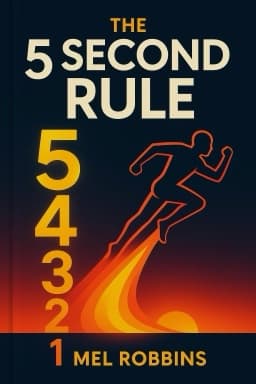
Stop Procrastinating Forever: The Science Behind Mel Robbins’ 5 Second Rule That Actually Works
Why counting backward from five can rewire your brain and crush procrastination for good.

Procrastination isn’t just laziness; it’s a complex neurological phenomenon involving fear, doubt, and habit. Mel Robbins’ 5 Second Rule offers a powerful tool to break free from this cycle by leveraging neuroscience and psychology. The premise is simple: when you feel the impulse to act on a goal, count backward 5-4-3-2-1 and move immediately.
Research shows hesitation activates the amygdala, which triggers fear and avoidance. This shuts down the prefrontal cortex, the brain’s decision-making center, causing you to freeze or procrastinate. By counting down, you create a distraction that interrupts this fear response and re-engages the prefrontal cortex. This simple mental trick gives you control over your actions, allowing you to override the brain’s default avoidance programming.
Moreover, the 5 Second Rule helps overcome the 'activation energy' barrier—the initial resistance to starting an action. Once you push past this, momentum carries you forward. This is why motivation often fails: it’s unreliable and fleeting, whereas the countdown provides a consistent, repeatable trigger.
Examples abound: a student who uses the rule to start studying instead of scrolling social media, an employee who speaks up in meetings despite anxiety, or a person who chooses to exercise despite exhaustion. These small courageous acts accumulate, rewiring your brain to favor action and building confidence.
Psychologists also emphasize that feelings drive most decisions—about 95% according to studies. This means that waiting to 'feel ready' is a trap. The 5 Second Rule empowers you to act despite feelings, creating new habits and breaking old ones.
In summary, the 5 Second Rule is a scientifically validated method to crush procrastination by rewiring your brain’s response to hesitation. It’s simple, accessible, and effective—no wonder millions swear by it.
References: 1 , 3 , 4
Want to explore more insights from this book?
Read the full book summary