
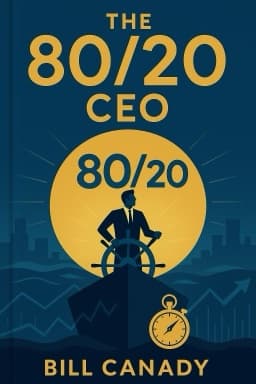
Why Most CEOs Fail at Growth (And How the 80/20 CEO Fixes That Forever)
Avoid the common pitfalls that doom CEOs and learn the 80/20 approach to transform your leadership

Leading a company is a high-stakes endeavor. Statistics show that many CEOs struggle to sustain profitable growth, often falling victim to common pitfalls such as spreading themselves too thin, chasing every opportunity, or neglecting core strengths. But why does this happen? And more importantly, how can leaders break the cycle?
One key reason is a lack of focus. CEOs try to do everything, leading to diluted efforts and missed opportunities. The 80/20 CEO framework addresses this by teaching leaders to identify the small subset of activities that produce the majority of results. By ruthlessly prioritizing these vital few, CEOs can concentrate resources and energy where they count.
Another common failure point is unclear or unrealistic goals. Without a compelling target, teams lack direction and motivation. The 80/20 CEO emphasizes setting SMART goals that are specific, measurable, assignable, realistic, and time-bound. These goals transform vague ambitions into actionable plans and create accountability.
Execution breakdowns also plague many organizations. Even the best strategies fail without aligned structures, clear roles, and disciplined follow-through. The book offers practical guidance on designing organizational structures that support strategy, assigning ownership of tasks, and embedding continuous improvement cycles like PDCA.
Talent mismanagement further undermines growth. Hiring the wrong people, ignoring culture, or failing to develop leaders can stall progress. The 80/20 CEO advocates for strategic talent acquisition, leadership balance through the Rule of Three, and fostering diversity and inclusion to drive innovation.
Moreover, many CEOs overlook operational excellence. Lean principles help eliminate waste and empower employees to improve processes daily, boosting efficiency and quality.
When growth stalls, some CEOs turn to mergers and acquisitions without proper alignment or integration plans, leading to costly failures. The 80/20 CEO stresses strategic fit, thorough due diligence, and careful integration to maximize value.
Finally, risk management is often an afterthought. Integrating enterprise risk management into strategy ensures resilience against market volatility and unforeseen disruptions.
By adopting the 80/20 CEO approach, leaders can avoid these traps, sharpen their focus, and drive sustainable growth. The framework provides a holistic, actionable roadmap that transforms how CEOs lead, strategize, and execute.
In essence, the 80/20 CEO is not just a book but a survival guide for leaders seeking to thrive in complexity and uncertainty. It challenges the status quo and equips you to lead with clarity, courage, and conviction.
Ready to break free from failure cycles and lead your business to lasting success? The answers lie in mastering the vital few.
Sources: Amazon reviews and summaries 4 , Blinkist 1 , Sobrief.com 2
Want to explore more insights from this book?
Read the full book summary