
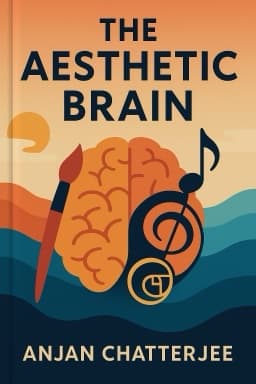
Unlocking the Brain’s Secret Code: Why We Crave Beauty and Art Like Air
Dive deep into the fascinating science behind our love for beauty and art, unraveling the brain’s hidden mechanisms that make aesthetic experiences so powerful.

Beauty and art have captivated human beings for millennia, yet their true nature remains a profound mystery. Why do certain faces, landscapes, or patterns evoke such deep emotional responses? What neural circuits underlie our craving for aesthetic pleasure? This journey into neuroaesthetics reveals that beauty is not merely an external attribute but a dynamic interaction between our brains and the world.
At the heart of aesthetic experience is the brain’s reward system, which distinguishes between 'liking'—the immediate pleasure of seeing or hearing something beautiful—and 'wanting'—the motivational drive to seek out more of that experience. These processes involve key structures like the nucleus accumbens and orbitofrontal cortex, modulated by neurotransmitters such as dopamine and opioids. This dual pleasure system explains why we might desire art or beauty even when it no longer brings the same joy, a phenomenon seen in addiction and craving.
Human faces and bodies speak a universal language of attraction rooted in evolutionary biology. Symmetry, averageness, and sexual dimorphism are cues our brains use to assess health and genetic fitness, yet culture amplifies and modulates these preferences through fashion and art. Similarly, our affinity for certain landscapes—open savannas with water and trees—reflects ancestral environments that offered safety and resources, a preference hardwired into our neural architecture.
Mathematics, often viewed as cold and abstract, reveals hidden beauty through patterns like the golden ratio and Euler’s identity. These mathematical constants appear throughout nature and art, bridging objective universal truths with human creativity. Our brains process these patterns using specialized regions, linking cognition with aesthetic appreciation.
Yet, beauty is paradoxical. It is both subjective and objective, disinterested yet deeply pleasurable. Culture shapes and exaggerates innate preferences, creating a rich, dynamic interplay that challenges simple definitions. Art itself is processed by flexible neural networks encompassing sensation, emotion, and meaning, illustrating the complexity of aesthetic experience beyond dedicated brain modules.
The evolutionary origins of art remain debated. Is art an instinct evolved for social bonding and communication, or a by-product of other cognitive abilities? The Bengalese finch’s culturally transmitted song offers a compelling analogy, showing how relaxed evolutionary pressures foster creative diversity. Art thus embodies human freedom and creativity, signaling who we are and who we aspire to be.
In sum, beauty and art are not just adornments of life but essential elements that heal, inspire, and connect us. Their power lies in the brain’s remarkable capacity to transform perception into meaning and pleasure, weaving a tapestry of experience that defines our humanity.
Explore more about the science of aesthetics and how it shapes your everyday encounters with beauty and art.
Sources: 1 , 2 , 3 , 4
Want to explore more insights from this book?
Read the full book summary