
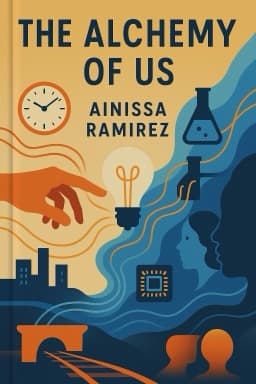
Article from Book Summary
From Sleep to Steel: 7 Surprising Ways Inventions Changed Daily Life
You’ll Never Look at Your Alarm Clock the Same Way Again

Literary Light
October 15, 2025453 views
The Alchemy of Us: How Humans and Matter Transformed One AnotherAinissa Ramirez
You’ll Never Look at Your Alarm Clock the Same Way Again
Think your daily routine is just common sense? Think again. In The Alchemy of Us, Ainissa Ramirez uncovers the hidden histories behind the most ordinary parts of life—revealing how inventions like the clock, the steel rail, and the light bulb quietly rewrote the rules of living. Here are seven of the most surprising ways technology changed daily life:
- Segmented Sleep: Before artificial light and strict schedules, people slept in two shifts, with an hour of wakefulness in the middle of the night. The invention of precise clocks compressed our rest into a single block, changing the way we dream, work, and even feel at night.
- The Business of Time: In early 20th-century London, Ruth Belville made a living selling the exact time, highlighting how society’s obsession with punctuality created new jobs and anxieties.
- Steel Rails and Christmas: The steel rail didn’t just build cities—it made Christmas a national, commercial event by enabling the mass transport of trees, cards, and gifts across the country.
- Telegraphy and News: The telegraph turned news into a shared, instant experience, shrinking the world and creating the first viral moments in history.
- Photographic Bias: Early color film favored white skin, quietly excluding millions from the visual record—a bias that activists and artists fought to overcome.
- Light Pollution: Electric light brought safety and productivity, but also erased the stars, changing our relationship with the night and the natural world.
- The Feedback Loop: Every invention changes us as much as we change it—affecting our values, our habits, and our sense of self.
Ramirez’s book is a treasure trove of these stories, each one showing how the material world is always shaping—and being shaped by—human lives. The next time you set your alarm, send a text, or snap a photo, remember: you’re part of a much bigger story.
Sources: Forbes, Kirkus Reviews, Undark
Want to explore more insights from this book?
Read the full book summary