
How Everyday Inventions Secretly Changed Who We Are
The Hidden Ways Clocks, Cameras, and Light Bulbs Reshaped Human Life

The Hidden Ways Clocks, Cameras, and Light Bulbs Reshaped Human Life
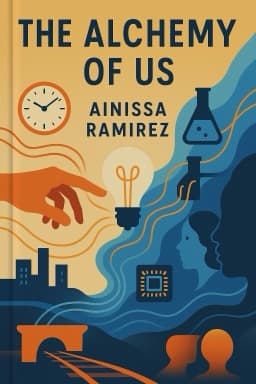
Imagine waking up not to the gentle light of dawn, but to the shrill ring of an alarm clock—a device that, as Ainissa Ramirez argues in The Alchemy of Us, did more than just tell time: it reprogrammed our bodies and minds. Ramirez’s book is a revelation, tracing the history of eight inventions and revealing how each one transformed not only the world around us but also the people living within it. As you read, you begin to realize that the story of innovation is not a straight line of progress, but a tangled web of cause and effect, full of unintended consequences and silent revolutions.
Take clocks, for example. Before their invention, people slept in two shifts, waking in the middle of the night to read, pray, or simply exist in the quiet dark. With the rise of precise timekeeping and artificial lighting, this natural rhythm vanished, replaced by the relentless pursuit of productivity. The clock became a taskmaster, compressing sleep, squeezing leisure, and even creating new anxieties about lateness and efficiency. Ramirez’s storytelling brings these shifts to life, showing how even the most mundane objects can rewire our habits and expectations.
Steel rails, another focus of the book, are not just the backbone of industry—they are the reason we celebrate Christmas the way we do, with trees and gifts crisscrossing the country on trains. The Bessemer process, which made steel cheap and plentiful, was the result of fierce legal battles and collective genius, not the lone inventor myth. The rails shrank distances, connected cities, and turned holidays into national events. Ramirez’s narrative is rich with these moments, reminding us that every technological leap is also a cultural one.
Perhaps the most striking stories are those where technology’s biases are laid bare. For decades, color film was calibrated for white skin, rendering people of color in shadow or with unnatural tones. This wasn’t just a technical flaw—it was a quiet act of exclusion, shaping who was seen and remembered. Ramirez details how activists and artists fought back, using photography as a tool for social change and demanding better representation. The book’s exploration of the feedback loop between invention and identity is both sobering and inspiring.
Electric light, too, is a double-edged sword. It brought safety, productivity, and comfort, but also erased the darkness, making stars invisible and disrupting the natural cues that guide wildlife and human rest. Ramirez doesn’t let us forget that every gain comes with a cost, and that true progress requires critical reflection on what we might be losing along the way.
What sets The Alchemy of Us apart is its insistence on storytelling. Ramirez weaves personal anecdotes, historical vignettes, and scientific insight into a tapestry that is both informative and deeply human. She shows that science is not just about facts, but about empathy, curiosity, and the courage to ask uncomfortable questions. The book ends with a call to action: to recognize the power we have as inventors—not just of things, but of the future itself. As we shape our tools, so too do they shape us. The alchemy is ongoing, and it is up to us to ensure it is a force for healing and hope.
For anyone curious about the secret life of everyday things—and the hidden ways they shape our lives—Ramirez’s book is essential reading. It will change the way you see your alarm clock, your camera, and the very light that fills your room. More importantly, it will change the way you see yourself, as both a product and a producer of history.
Sources: Forbes, Kirkus Reviews, Undark, MindTools
Want to explore more insights from this book?
Read the full book summary