
How Social Media Hijacked Childhood—and What We Can Do About It
Exploring the Four Foundational Harms of the Digital Age

Exploring the Four Foundational Harms of the Digital Age
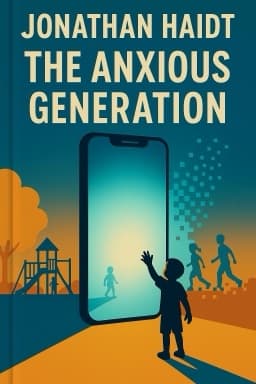
When did childhood become so complicated? For today’s teens, social media is not just a pastime—it’s the center of their social universe. But as Jonathan Haidt reveals in 'The Anxious Generation,' this digital shift has come at a steep price.
Social media platforms, especially those focused on images and instant feedback, have amplified the pressures of adolescence. Girls, in particular, face relentless comparison and online drama, leading to spikes in anxiety and depression. Boys, meanwhile, are drawn into gaming and online communities, sometimes at the expense of real-world friendships and responsibilities.
The four foundational harms identified by Haidt—social deprivation, sleep loss, attention fragmentation, and addiction—are interwoven. Late-night scrolling disrupts sleep, making it harder to cope with stress. Constant notifications fragment attention, leaving teens unable to focus or reflect. And the engineered addictiveness of apps means it’s harder than ever to unplug.
But there is hope. Families and schools are beginning to implement phone-free policies, delay social media until later teen years, and encourage more in-person interaction. Community initiatives and new policies are gaining traction, showing that collective action can make a real difference.
If we want to reclaim childhood, we must understand the digital forces at play—and work together to set healthier boundaries.
References: The Anxious Generation, interviews with tech experts, recent studies on digital addiction, and policy reports.
Want to explore more insights from this book?
Read the full book summary