
Why Are Today’s Teens So Anxious? Inside the Smartphone Crisis
Unpacking the Digital Revolution and Its Impact on Our Children’s Wellbeing

Unpacking the Digital Revolution and Its Impact on Our Children’s Wellbeing
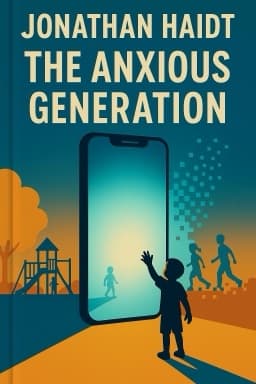
The past decade has witnessed an alarming transformation in the mental health of young people. Rates of anxiety, depression, and self-harm have soared, especially among teenagers. But what’s driving this crisis? Jonathan Haidt’s 'The Anxious Generation' offers a compelling answer: the smartphone revolution has fundamentally rewired childhood, and the consequences are profound.
Imagine a typical evening in any modern home. Teens retreat to their rooms, eyes glued to glowing screens, endlessly scrolling through social media feeds. Once, childhood was filled with outdoor play, spontaneous adventures, and face-to-face friendships. Now, much of it unfolds in the digital realm, where likes and comments replace real-life laughter and connection.
Haidt’s research is both broad and deep, drawing on international data to show that the mental health crisis is not confined to the United States. Countries as diverse as the UK, Canada, and the Nordic nations report similar spikes in youth anxiety and depression, all beginning around 2012—the year smartphones and social media became ubiquitous among teens. This global synchronicity points to a shared cause, not a cultural coincidence.
So, what’s happening on those screens? Haidt identifies four foundational harms of phone-based childhood:
- Social Deprivation: Time spent online replaces real-world interactions, eroding vital social skills and emotional resilience.
- Sleep Loss: Late-night scrolling disrupts natural sleep cycles, leaving teens exhausted and more vulnerable to stress.
- Attention Fragmentation: Constant notifications and endless feeds make deep focus and reflection nearly impossible.
- Addiction: Social media platforms are engineered to be addictive, exploiting the vulnerabilities of developing brains.
Girls and boys are not affected equally. Girls, more sensitive to social comparison, suffer higher rates of anxiety and depression. Boys, meanwhile, often withdraw into gaming and digital isolation, delaying their transition to adulthood.
But the story doesn’t end with despair. Haidt and other experts offer hope: by delaying smartphones, limiting social media, and reviving free play, families and schools can help restore balance. Communities that act together—implementing phone-free policies and encouraging real-world connection—see children thrive once again.
As we navigate this new landscape, it’s clear that the challenge is not just technological, but deeply human. The solution lies in collective action, ancient wisdom, and the courage to put children’s wellbeing above convenience or peer pressure. The anxious generation can become a resilient one—if we act now.
References: The Anxious Generation by Jonathan Haidt, interviews with educators, recent mental health studies, and family stories from around the world.
Want to explore more insights from this book?
Read the full book summary