
Unlocking the Fluidity of Love and Language: How Queer Kinship Redefines Family and Identity
Discover how queer perspectives on love, language, and family challenge traditional boundaries and open new possibilities for connection.

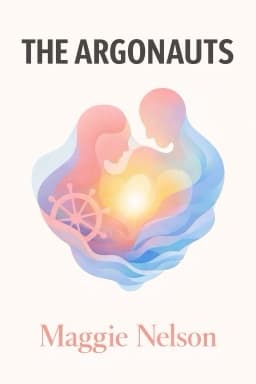
Love and language are deeply intertwined in a dance of paradox and renewal. As Wittgenstein insightfully noted, "The inexpressible may be contained (inexpressibly!) in the expressed." This paradox lies at the heart of queer kinship, where traditional boundaries of family and identity are not merely challenged but reimagined. Imagine the metaphor of the Argonaut’s ship, rebuilt plank by plank over time yet retaining its name and essence. Similarly, each utterance of "I love you" is an act of re-creation, where meaning is continuously renewed rather than fixed.
Queer kinship extends this fluidity into the realm of family, where bonds are forged not solely by biology but by choice, care, and resilience. These families often blend generations, genders, and identities in ways that both mimic and transcend traditional structures. This fluidity creates spaces of belonging that defy binaries, offering new models of connection and support.
However, this redefinition is not without challenges. Legal recognition often lags behind lived realities, with queer families facing hurdles in custody, marriage, and social acceptance. These barriers highlight the ongoing negotiation between personal identity and public validation, underscoring the courage and creativity required to sustain queer kinship.
Contemporary scholarship emphasizes that kinship is not a fixed category but an evolving constellation of relationships. Queer families exemplify this by actively creating new forms of belonging that honor complexity and difference, blending the old with the new in vibrant, living communities.
Ultimately, the fluidity of love, language, and kinship invites us to embrace impermanence and transformation as sources of strength. By recognizing the ongoing renewal of meaning and connection, we open ourselves to richer, more inclusive understandings of identity and family.
For those interested in exploring these themes further, research in queer theory and family studies offers profound insights into how these dynamics play out in everyday life and broader social contexts. Such work challenges us to rethink assumptions and to celebrate the diversity of human connection.
This exploration not only enriches our understanding of queer kinship but also offers valuable perspectives for anyone seeking to deepen their appreciation of love, language, and the evolving nature of family.
References and further reading include studies on queer kinship dynamics, the performativity of gender, and the politics of queer family-making, which collectively illuminate the transformative potential of these ideas in contemporary society.
Embrace the journey of fluidity and renewal—where love is not a fixed point but a living, breathing act of creation.
2 , 3 , 4
Want to explore more insights from this book?
Read the full book summary