
The Science of Superhuman: Why Peak Performance Is Within Your Reach
How cutting-edge brain science reveals the secrets to achieving the extraordinary.

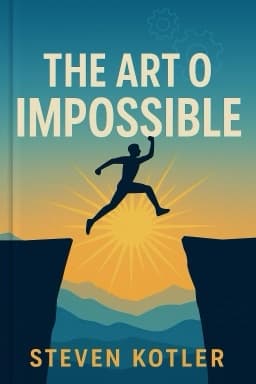
For centuries, the idea of 'superhuman' achievement was reserved for legends and outliers. But what if science could show us that extraordinary performance is within everyone’s reach? Steven Kotler’s The Art of Impossible draws on decades of neuroscience to reveal how the brain’s natural chemistry can be harnessed for greatness.
Kotler explains that motivation is not just a feeling, but a carefully orchestrated neurochemical process. Curiosity triggers dopamine, which enhances focus and learning. When curiosity evolves into passion and purpose, the brain releases even more powerful chemicals, creating a self-reinforcing cycle of drive and engagement. Autonomy and mastery further amplify this effect, making hard work feel like play.
The book’s most compelling insight is the science of flow. In flow, the brain enters a state of hyperfocus and creativity, powered by a unique blend of neurochemicals. Kotler identifies 22 triggers for flow, from clear goals to immediate feedback, and explains how anyone can design their environment to maximize these triggers. Flow is not a constant state; it’s part of a cycle that includes struggle, release, flow, and recovery. Each stage is essential for sustained growth.
Grit and resilience are also biological skills. Willpower is finite, so Kotler advises tackling the hardest tasks early in the day when energy is highest. He also emphasizes the importance of recovery—sleep, meditation, and nature walks—to consolidate learning and prevent burnout.
Throughout the book, Kotler shares stories of people who have achieved the impossible by aligning their habits with their biology. From athletes breaking world records to entrepreneurs launching billion-dollar companies, the common thread is a deep understanding of how the brain works—and a willingness to play the infinite game of self-improvement.
In the end, The Art of Impossible is a celebration of human potential, grounded in hard science and practical wisdom. It’s a call to action for anyone who believes there’s more to life than ordinary achievement. The superhuman, it turns out, is simply the human—fully activated. 2 3
Want to explore more insights from this book?
Read the full book summary