
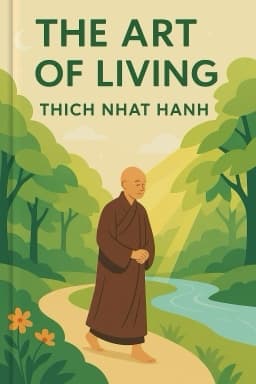
Why Mindful Breathing from 'The Art of Living' Will Change Your Life (Backed by Science!)
Discover the science and soul behind the simplest, most powerful tool for happiness.

What if the secret to happiness was as close as your next breath? In 'The Art of Living,' Thich Nhat Hanh teaches that mindful breathing is the gateway to peace, clarity, and resilience. But this isn’t just spiritual advice—modern science agrees.
When you take a slow, conscious breath, your body shifts from stress mode into calm. Neuroscientists have found that mindful breathing activates the parasympathetic nervous system, lowering heart rate and blood pressure, and reducing levels of stress hormones like cortisol. Over time, this practice can rewire the brain, strengthening areas responsible for emotional regulation and focus.
Thich Nhat Hanh describes mindful breathing as music—continuous, harmonious, and deeply nourishing. Each breath is an opportunity to return to yourself, to let go of worries about the past or future, and simply be. This presence brings clarity, allowing you to respond to life’s challenges with wisdom instead of reactivity.
Clinical studies show that even five minutes of mindful breathing a day can reduce anxiety, improve sleep, and enhance overall well-being. It’s a tool that fits into any lifestyle—no special equipment or training required. The key is consistency: return to your breath whenever you feel overwhelmed, distracted, or disconnected.
Try this: Next time you’re stressed, pause and take three slow, mindful breaths. Notice the air entering your nose, filling your lungs, and leaving your body. Feel your feet on the ground. In that moment, you are fully alive, fully present.
Mindful breathing is more than a technique—it’s a way of living. As Thich Nhat Hanh says, 'To be alive is the greatest of all miracles.' Start with your next breath and let the miracle unfold.
For more on the science of mindfulness, see studies from Harvard, Stanford, and leading wellness experts. [[0]](#__0) [[1]](#__1)
Want to explore more insights from this book?
Read the full book summary