
Why Rigid Negotiation Tactics Fail: The Power of Flexibility and Creativity
Discover why sticking to fixed plans can sabotage your deals and how flexibility can turn the tide.

Many enter negotiations armed with fixed plans, scripts, and bottom lines, believing that sticking to these will guarantee success. Yet, time and again, these rigid tactics falter in the face of real-world complexity. Negotiation is not a mechanical process but a dynamic dance requiring flexibility and creativity.
Consider the story of an investor who, stuck on price, switched roles to become a seller, doubling his investment. This role-switching exemplifies the power of mental agility. Instead of walking away, he improvised, showing that fixed positions limit outcomes.
Flexible mental mapping is crucial. It balances confidence, momentum, and vigilance, allowing negotiators to move forward while adapting to new information. Setting broad, flexible baselines rather than rigid bottom lines prepares you to respond to evolving circumstances and avoid premature concessions.
Presence of mind—being calm, alert, patient, and proactive—is the emotional foundation that supports flexibility. External factors like room ambiance and posture affect mood and performance, and mastering this internal state helps negotiators stay centered amidst chaos.
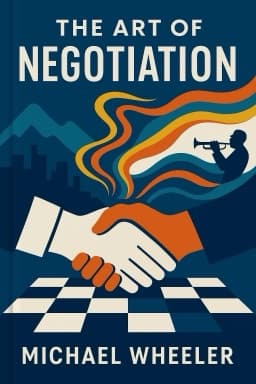
Improvisation is the art of dynamic interaction. Like jazz musicians, negotiators listen deeply, respond creatively, and use strategic provocation to disrupt stalemates. This approach contrasts sharply with rigid bargaining models and opens new avenues for agreement.
Managing negotiation’s critical moments—openings, tipping points, and closings—with agility preserves momentum and relationships. Positive openings build trust, while careful handling of irreversible offers and emotional outbursts prevents breakdowns.
Creativity unlocks hidden value by reframing issues and exploring alternatives. Deadlocks are opportunities in disguise, waiting for curious minds to discover solutions that satisfy all parties.
In sum, rigid tactics are brittle and prone to failure, while flexibility and creativity empower negotiators to navigate complexity, build rapport, and craft superior deals.
Want to explore more insights from this book?
Read the full book summary