
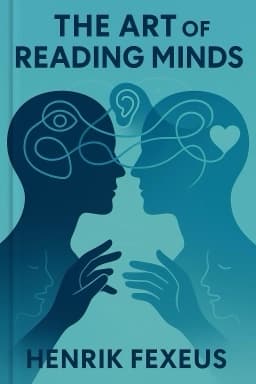
Why Most People Misread Body Language—And How to Get It Right Every Time
Debunking Common Myths and Revealing the Real Science Behind Mind Reading

Debunking Common Myths and Revealing the Real Science Behind Mind Reading
Body language is everywhere—from a nervous handshake to a reassuring smile—but most people get it wrong. Movies and TV have taught us to look for 'tells,' like someone scratching their nose when they lie. Henrik Fexeus’s work and modern psychology show that real mind reading is far more nuanced. Context matters: a crossed arm can signal coldness, comfort, or just a chilly room. 4
The key is to look for clusters of signals. If someone’s words, tone, and body language all line up, you can trust what you see. But if there are contradictions—a confident speech with a tense jaw, or a smile that doesn’t reach the eyes—something deeper may be going on. Microexpressions, those split-second flashes of true emotion, are especially telling. 3
Cultural differences also play a huge role. A gesture that means 'okay' in one country might be offensive in another. Always consider the person’s background, the situation, and recent events. 4
To improve your skills, resist the urge to judge quickly. Instead, observe, ask open-ended questions, and listen with empathy. The goal isn’t to catch someone out—it’s to understand them better and build trust. With practice, you’ll become a more compassionate, insightful communicator. 2
Conclusion
Forget the myths. Mind reading is about patience, context, and genuine curiosity. Use these skills to connect, not control, and you’ll find your relationships growing deeper and more authentic every day. 1 3 4
Want to explore more insights from this book?
Read the full book summary