
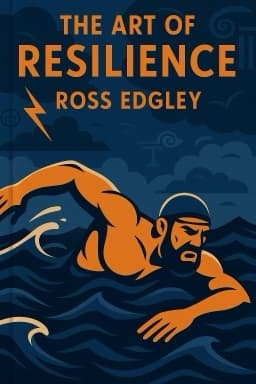
How One Man Swam 1,780 Miles and Unlocked the Secrets of Ultimate Resilience
Discover the incredible journey of Ross Edgley’s Great British Swim and the science behind human resilience.

Imagine plunging into the icy waters of the North Sea, knowing you will swim daily for over five months, covering nearly 1,800 miles without touching land. This was the reality for Ross Edgley, who embarked on the Great British Swim, a feat that pushed the limits of human endurance and mental fortitude. But beyond the physical challenge lies a fascinating story of resilience, strategy, and philosophy.
At the heart of Edgley's success was a unique blend of ancient Stoic philosophy and cutting-edge sports science. The stoics taught mastery over the mind and body, focusing on controlling internal responses rather than external circumstances. This mindset was crucial when facing relentless cold, jellyfish stings, and the overwhelming monotony of open water. Daily journaling and mental discipline helped Edgley maintain clarity and purpose.
Physiologically, the swim demanded extraordinary strength and adaptation. Edgley’s body transformed over time, developing thickened, callused skin—nicknamed the 'Rhino Neck'—to protect against abrasions and jellyfish. Strength training fortified muscles and connective tissues, preventing injury despite the enormous physical toll. The principle of Specific Adaptation to Imposed Demands (SAID) was evident as his body became finely tuned to the unique stresses of the swim.
Nutrition was another monumental challenge. Burning 10,000 to 15,000 calories daily required a carefully planned diet rich in carbohydrates, fats, and proteins. Edgley consumed hundreds of bananas and nutrient-dense soups, training his gut to tolerate large volumes of food and fluids. Hydration was monitored in unconventional ways, highlighting the human element in a scientific endeavor.
The mental battle was equally fierce. The Central Governor Theory explains that fatigue is largely regulated by the brain to protect the body. Edgley’s intrinsic motivation, driven by a higher purpose and personal meaning, enabled him to push through perceived limits. Positive emotions like optimism and social support modulated pain and fatigue perception, proving that endurance is as much psychological as physical.
Pacing and the mammalian dive reflex—a natural slowing of the heart rate triggered by cold water—helped conserve oxygen and energy. Edgley balanced effort carefully, avoiding immune suppression and overexertion. Acceptance of uncontrollable factors, a core stoic principle, reduced stress and preserved mental clarity.
Strategic suffering was key: learning to differentiate between harmful pain and manageable discomfort allowed Edgley to endure hardship without injury. Habituation to pain lowered its intensity over time, building resilience.
Ultimately, Edgley’s swim is more than a sporting achievement; it is a blueprint for resilience applicable to all walks of life. The lessons of mental toughness, purposeful motivation, acceptance, and strategic endurance offer powerful tools for anyone facing adversity.
Whether you’re an athlete, a student, or simply navigating life’s challenges, the story of the Great British Swim inspires us to believe in the impossible and equips us with practical strategies to endure and thrive.
Want to explore more insights from this book?
Read the full book summary