
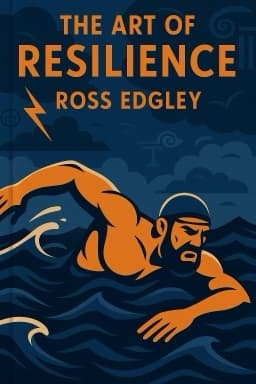
Unlocking the Stoic Secrets Behind Extreme Endurance: Lessons from the Great British Swim
How ancient wisdom and modern science combined to conquer one of the toughest endurance challenges.

Endurance is as much a mental challenge as a physical one. The ancient philosophy of Stoicism, with its emphasis on controlling internal responses and accepting external realities, proved to be a guiding light for Ross Edgley during his 1,780-mile swim around Great Britain.
Stoicism teaches that while we cannot control the waves or the weather, we can control our reactions, our attitudes, and our actions. Edgley’s daily journaling was a critical mental tool, helping him process doubt, reinforce purpose, and maintain focus. This practice fostered a mindset that turned suffering into growth and uncertainty into opportunity.
Scientific understanding complemented this philosophy. Strength training built a resilient body, adapted specifically to the swim’s demands. The mammalian dive reflex, triggered by cold water on the face, slowed his heart rate to conserve oxygen, enhancing endurance. Pacing strategies ensured he stayed below thresholds that might cause immune suppression or burnout.
Intrinsic motivation — the personal meaning behind the swim — activated brain reward pathways, fueling persistence even when the body screamed to stop. Positive emotions like optimism and gratitude modulated pain perception, showing that emotional regulation is a vital component of endurance.
Acceptance of uncontrollable elements — weather, jellyfish encounters, and isolation — reduced stress and preserved mental clarity. This stoic acceptance was not resignation but strategic resilience, allowing Edgley to focus energy where it mattered most.
These lessons extend far beyond the swim. They offer a blueprint for facing life’s inevitable hardships with strength, grace, and purpose.
By integrating stoic philosophy with modern sports science, Edgley’s journey illuminates the path to resilience — a path open to all who dare to endure.
Want to explore more insights from this book?
Read the full book summary