
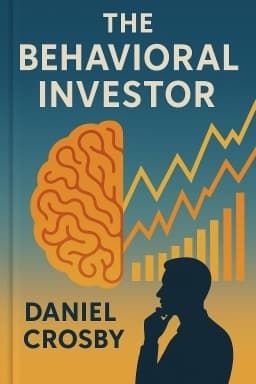
The Untold Secrets of Behavioral Investing: Why Most Investors Fail and How You Can Win
Unveil the psychological traps that doom most investors and the proven methods to outsmart the market's emotional rollercoaster.

Despite the wealth of information and technology available, the majority of investors fail to achieve market-beating returns. The culprit? Our own minds. Behavioral investing reveals that cognitive biases—hardwired into our brains through evolution—undermine rational decision-making and lead to predictable mistakes.
Overconfidence is perhaps the most pervasive bias. Studies show over 95% of people believe they are above average in various skills, a statistical impossibility. This overconfidence drives excessive trading, often reducing returns by up to 1-2% annually. Men, in particular, trade 45% more than women and tend to underperform due to this bias.
Loss aversion—the pain of losing money being twice as powerful as the pleasure of gains—makes investors freeze or sell at the worst times. Physiological studies show that anticipating losses activates brain areas linked to physical pain, explaining the emotional paralysis many feel during downturns.
Status quo bias and the sunk cost fallacy trap investors in familiar but suboptimal decisions. The reluctance to change leads to holding losing investments and missing opportunities. This inertia is a major contributor to underperformance.
Attention biases further distort reality. The availability heuristic causes investors to overestimate the likelihood of vivid but rare events, fueled by sensational media coverage. This leads to panic selling during crashes and euphoric buying during bubbles.
Emotions—fear, greed, anxiety—are the invisible forces shaping markets. Elevated cortisol during stress reduces risk appetite by 44%, impairing judgment. Conversely, greed blinds investors to risks during market booms.
Fortunately, behavioral investing offers tools to fight these biases. Mindfulness meditation reduces emotional reactivity, while automation and rules-based investing remove impulsive decisions. Diversification mitigates ego-driven concentration risks, and dialectical bootstrapping leverages collective intelligence to improve forecasts.
Psychological diversity in investment teams counters groupthink, enhancing decision quality. The emerging approach of Rules-Based Behavioral Investing combines passive and active strategies with behavioral insights, balancing cost, risk, and emotion for better outcomes.
By recognizing and managing these psychological traps, investors can transform their approach and increase their chances of long-term success. Behavioral investing is not just a theory but a practical guide to mastering the mind and markets.
Embrace these insights and win where most fail.
Want to explore more insights from this book?
Read the full book summary