
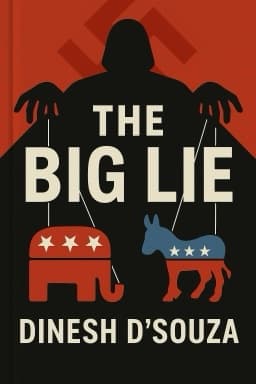
Exposing the Left’s Fascist Roots: What They Don’t Want You to Know
The Untold Story of How Leftist Ideologies Mirror Fascist Principles

For decades, political discourse has been clouded by misconceptions and deliberate distortions about the origins and nature of fascism. Contrary to popular belief, fascism did not arise from conservative or right-wing ideologies but from revolutionary socialist movements. This blog uncovers the hidden history and modern implications of this truth.
Benito Mussolini, often portrayed as a far-right dictator, was initially a Marxist socialist deeply involved in leftist politics. Fascism emerged as a splinter faction within socialism, advocating a collectivist, nationalist state that rejected traditional class struggle but maintained socialist principles of state control and collectivism.
The American Democratic Party’s historical policies further complicate the narrative. From supporting slavery to enforcing segregation and opposing civil rights, the party’s legacy aligns disturbingly with fascist racial ideologies. The Ku Klux Klan’s role as a domestic terrorist group enforcing white supremacy parallels the paramilitary tactics of European fascism.
Franklin D. Roosevelt’s New Deal introduced corporatist economic policies that Mussolini admired, blending government intervention with business interests in a manner characteristic of fascism. This challenges the assumption that fascism is antithetical to democracy or liberalism.
The modern Left’s control over universities, media, and entertainment functions as a cultural hegemony enforcing ideological conformity, reminiscent of Nazi Gleichschaltung. This monopoly on cultural narratives suppresses dissent and narrows public discourse, threatening free speech and ideological diversity.
To counter these authoritarian tendencies, society must embrace a process akin to denazification — exposing lies, restoring truth, and fostering open dialogue. Only through such efforts can democratic principles and individual freedoms be preserved and strengthened.
This blog invites readers to reconsider entrenched political assumptions and engage critically with history and current events to better understand the ideological battles shaping our world.
For further insights, consult works by historians and political analysts who delve into the complex intersections of socialism, fascism, and modern politics. 1 2 4
Want to explore more insights from this book?
Read the full book summary