
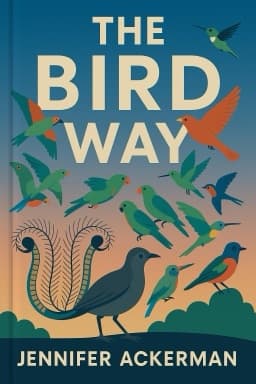
Birds’ Sensory Superpowers: From Silent Night Hunts to Oceanic Smell Maps
Explore the incredible sensory adaptations that allow birds to thrive in the darkest nights and vastest oceans.

When night falls, owls take to the skies, silent and deadly. Their secret lies in their asymmetrical ears, positioned unevenly on their heads, allowing them to pinpoint the faintest rustle of prey beneath leaves or snow.
Birds’ sensory mastery extends beyond hearing. Over vast oceans, seabirds rely on their sense of smell to locate food. They detect dimethyl sulfide, a chemical signal released by phytoplankton when grazed by tiny crustaceans, guiding them to rich fishing grounds invisible to the eye.
Some birds take ingenuity further. Australian raptors have been observed deliberately spreading wildfires by carrying burning sticks to flush out prey.
Birds also show remarkable adaptability in feeding, avoiding toxins by impaling prey on thorns or consuming carrion with stomach acids strong enough to neutralize pathogens. These strategies highlight their cognitive flexibility and ecological importance.
These sensory superpowers reveal birds as intelligent, adaptable survivors, equipped with tools and skills that inspire awe. Their mastery of senses and environment invites us to reconsider the boundaries of animal cognition and the wonders of the natural world.
Next, we dive into the playful and social behaviors that showcase birds’ intelligence and complexity.
Sources: Neuronal Mechanisms of Alarm Calling Behavior - Max Planck Institute, 2024; Bird Intelligence and Tool Use Studies, 2023
Want to explore more insights from this book?
Read the full book summary