
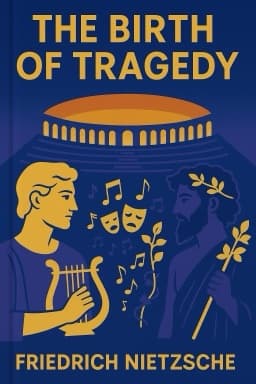
Laughing in the Face of Tragedy: Nietzsche’s Guide to Joyful Strength and Life-Affirmation
How Nietzsche’s vision of laughter and the higher man offers a path to resilience and joy amid life’s hardships

At the end of the long journey through suffering, art, and metaphysical insight, Nietzsche offers a profound and uplifting lesson: the laughter of the higher man. This laughter is not frivolous or dismissive; it is a sacred, courageous affirmation of life despite its terrors and pains.
The higher man, symbolized by the figure of Zarathustra, dances atop the mountain of existence, wings spread wide, radiant in the dawn light. He embraces life’s tragic contradictions with joy and strength, transforming suffering into a source of creative power and wisdom.
This laughter is a form of tragic affirmation — an acceptance that life is both terrible and beautiful, a paradox to be danced with rather than escaped. It marks a path to resilience, encouraging us to find meaning and vitality even in hardship.
Nietzsche’s call to learn to laugh is a call to freedom, self-overcoming, and joyous existence. It invites us to wear the crown of laughter as a symbol of strength and spiritual maturity.
By cultivating this perspective, we can face life’s challenges not with despair but with a lightness of being, a dance that celebrates the aesthetic phenomenon of existence itself.
This final insight completes the circle Nietzsche began — affirming that tragedy, far from being a source of nihilism, is the wellspring of life’s most profound joy and meaning.
Sources: Philosophy Now, SparkNotes 3 1
Want to explore more insights from this book?
Read the full book summary