
Why Nietzsche’s Birth of Tragedy Is the Ultimate Guide to Understanding Life’s Chaos and Order
Learn how the ancient Greek tragic vision offers timeless wisdom for navigating modern life’s contradictions

Life is a paradox — a ceaseless interplay between chaos and order, pain and joy, reason and passion. For many, this tension is a source of confusion or despair. Yet, Friedrich Nietzsche’s The Birth of Tragedy offers a profound lens to understand and embrace this paradox through the ancient Greek tragic vision.
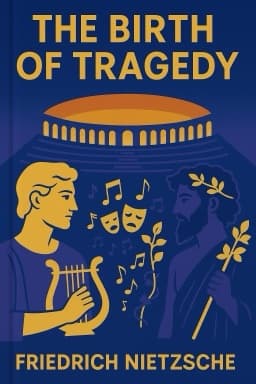
At the core of Nietzsche’s insight are two primal forces: the Apollonian and the Dionysian. The Apollonian represents the world of form, clarity, and individuation — the dreamlike images that give shape to experience. The Dionysian embodies ecstatic unity, primal suffering, and the dissolution of the self into a greater whole. Together, they form a dynamic tension that fuels creativity and reveals the deeper meaning of existence.
Greek tragedy emerged as the artistic expression of this tension, combining the Apolline dream-world with the Dionysiac chorus’s wild ecstasy. This art form confronts suffering head-on but transforms it into a powerful affirmation of life’s worth. Nietzsche argues that only as an aesthetic phenomenon can existence be justified — meaning that art, especially tragedy, reveals the value hidden in life’s contradictions.
However, the rise of Socratic rationalism shifted cultural values towards reason and optimism, undermining the tragic vision. Tragedy lost its metaphysical depth, becoming a moralistic and psychological drama. Nietzsche sees this as a cultural loss, a retreat from the primal truths of existence.
Music, however, remains a vital force. As the direct expression of the metaphysical will, music transcends language and image, connecting us with the primal emotions and realities that tragedy once revealed. Myth arises as a symbolic language born from music’s power, enabling humans to grasp what lies beyond reason.
The rebirth of tragedy through German music symbolizes a hopeful cultural renewal. Composers like Wagner and Beethoven reawaken the Dionysiac spirit, blending myth and emotion to restore the tragic vision’s vitality.
Finally, Nietzsche presents the higher man who laughs in the face of suffering — a figure who embraces life’s tragic dance with courage and joy. This laughter is not denial but a sacred affirmation, transforming pain into strength and meaning.
By understanding and embodying these insights, we can navigate life’s chaos and order with resilience and grace, finding beauty and meaning even in suffering.
Sources: SparkNotes, SuperSummary, Philosophy Now 1 2 3
Want to explore more insights from this book?
Read the full book summary