
The Untold Story of Money: From Rai Stones to Bitcoin’s Digital Gold
Explore the fascinating evolution of money and how Bitcoin fits into this ancient story

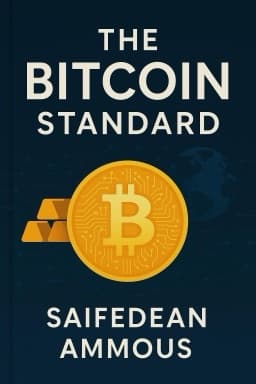
Money is often taken for granted, yet its history is rich with fascinating examples that reveal its true nature as a social contract. Saifedean Ammous’s The Bitcoin Standard brings these stories to life, showing how money evolved from primitive objects to the sophisticated digital currencies of today.
Consider the Rai stones of Yap Island—massive limestone disks used as currency without physically moving them. Ownership was transferred through public announcements, relying entirely on community trust. This challenges the common notion that money must be a physical object exchanged hand-to-hand. Instead, it shows money’s power lies in collective recognition and social agreement.
However, technological advances that made quarrying Rai stones easier flooded the market and devalued the stones, illustrating how supply control is critical for money’s value. This lesson echoes through history, from seashells to precious metals.
Gold’s unique properties—rarity, chemical stability, divisibility—made it the premier money for centuries. Its high stock-to-flow ratio ensured scarcity, making it a reliable store of value. Silver complemented gold for everyday transactions but was less ideal due to industrial demand consuming supply.
The gold standard created a monetary discipline that supported economic growth and international trade. Yet, the pressures of war and political interests led to its demise, replaced by fiat money backed only by government decree.
Fiat money’s flexibility comes at a cost: inflation, loss of savings, and economic instability. Monetary nationalism fractured global cooperation, leading to competitive devaluations and economic hardships.
The story culminates with Bitcoin—a digital currency designed to restore sound money principles. Its capped supply, decentralized security, and digital portability create a new form of money fit for the 21st century.
Bitcoin’s design addresses the flaws of fiat and offers an antifragile system that grows stronger with challenges. While it faces adoption hurdles, its potential to reshape money and empower individuals is profound.
Understanding this evolution helps us appreciate money’s role beyond mere transactions—it’s a driver of culture, trust, and human progress. Bitcoin may well represent the next chapter in this ongoing story.
References:
Want to explore more insights from this book?
Read the full book summary