
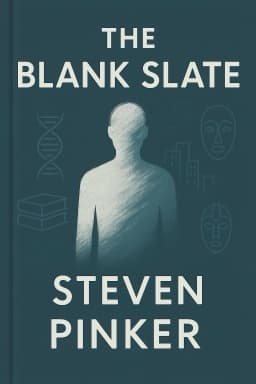
Nature vs. Nurture Is Over: What the Science of Human Nature Really Means for Your Life
Forget everything you learned about raising kids—here’s what the latest science (and ‘The Blank Slate’) actually says.

For generations, parents have agonized over every decision, teachers have labored to mold young minds, and policymakers have crafted programs to close achievement gaps—all based on the belief that with enough effort, any child can become anything. But Steven Pinker’s 'The Blank Slate' delivers a bracing message: the age-old debate between nature and nurture is over. The answer is both, but not in the way you might think.
Pinker marshals evidence from genetics, neuroscience, and psychology to show that while environment matters, it can’t erase or completely override the influence of genes. Twin and adoption studies reveal that much of what makes us who we are—intelligence, temperament, even quirks—comes from our DNA. But that doesn’t mean parents don’t matter. Instead, their role is more like gardening than engineering: providing a safe, loving environment where each child’s unique traits can flourish.
One of the most surprising findings is the power of peers. Children often adopt the language, interests, and behaviors of their friends more than those of their parents. This means that while good parenting can help, it can’t guarantee outcomes. The pressure to be a perfect parent—or to blame parents for every problem—is not just unfair, it’s unsupported by science.
Embracing the reality of human nature is liberating. It allows parents to focus on what matters most—love, support, and opportunity—without the crushing burden of total responsibility. It helps teachers design classrooms that nurture diverse talents and learning styles. And it helps society create policies that reflect the true complexity of human development.
The science of human nature doesn’t mean giving up on progress or compassion. It means working with, not against, the grain of who we are. It’s time to move beyond the old debates and build a future based on understanding, acceptance, and hope.
Sources: 1 2 4
Want to explore more insights from this book?
Read the full book summary