
Inside 'The Bluest Eye': How Toni Morrison Unveils the Dark Side of Beauty Standards
A deep dive into the psychological and cultural layers of Morrison’s novel that reveal the pain behind beauty myths.

Toni Morrison’s The Bluest Eye is much more than a story about a girl wishing for blue eyes; it is a searing indictment of the cultural forces that define beauty and worth through a narrow, racialized lens. Pecola Breedlove’s tragic desire to possess blue eyes symbolizes a deeper psychological wound inflicted by a society that glorifies whiteness at the expense of Black identity.
The novel also exposes the painful reality of colorism — the preferential treatment of lighter skin within the Black community itself. Characters like Maureen Peal, who has light skin and is perceived as beautiful, receive social privileges that highlight the divisions and jealousies that colorism fosters. Morrison’s portrayal of these dynamics challenges readers to confront uncomfortable truths about how beauty standards are not monolithic but layered with social hierarchies.
Psychologically, the novel delves into how trauma and neglect erode innocence and self-worth. Pecola’s mental collapse and retreat into an imaginary world reflect a desperate coping mechanism against overwhelming pain. The novel’s fragmented narrative style — shifting between child and adult perspectives, as well as an omniscient voice — mirrors this fractured psyche and invites readers to assemble the story’s emotional puzzle.
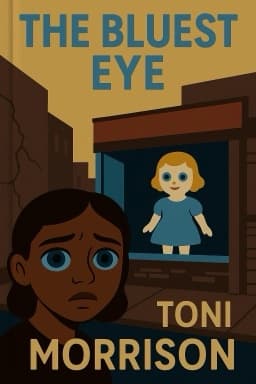
Symbolism abounds: dolls, mirrors, and broken storefronts are not mere objects but vessels of meaning. The marigold seeds planted by Claudia and Frieda represent fragile hope, which ultimately fails to take root, underscoring the novel’s meditation on lost innocence. The houses themselves are metaphors for economic hardship, emotional states, and racial boundaries.
In sum, The Bluest Eye is a masterclass in weaving psychological depth with cultural critique. It remains a vital text for understanding the enduring impact of racialized beauty standards and the urgent need to foster self-love and community healing.
For readers and scholars alike, Morrison’s novel offers a profound exploration of identity formation under the shadow of oppression, making it essential reading for anyone interested in race, psychology, and literature.
Want to explore more insights from this book?
Read the full book summary