
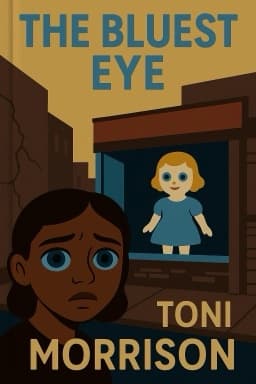
Why 'The Bluest Eye' Still Haunts and Heals: The Untold Truth About Beauty and Identity
Exploring the devastating beauty standards and racial identity struggles in Toni Morrison's groundbreaking novel.

Toni Morrison’s debut novel, The Bluest Eye, published in 1970, remains one of the most powerful explorations of race, beauty, and identity in American literature. At its core, the story follows Pecola Breedlove, a young Black girl who believes that possessing blue eyes will transform her life and grant her the love and acceptance she desperately craves.
The novel’s structure is as complex as its themes. Told through multiple perspectives, including the childlike innocence and adult reflection of Claudia MacTeer, and an omniscient narrator, the story unfolds in a fragmented, non-linear fashion. This narrative style mirrors the fractured identities and traumatic experiences of the characters, compelling readers to actively engage in piecing together the emotional and social realities at play.
Symbolism saturates the text. The recurring motif of blue eyes represents not just physical beauty but the yearning for acceptance in a society that equates whiteness with worthiness. The Breedlove family home, a dilapidated storefront, symbolizes poverty and neglect, while dolls and mirrors reflect the characters’ struggles with self-image. The planting of marigold seeds by Claudia and Frieda embodies fragile hope, which tragically fails to bloom, underscoring the novel’s meditation on innocence lost.
Beyond Pecola’s personal tragedy, the novel critiques broader societal dynamics, including colorism within the Black community and the pervasive dominance of white cultural standards. Characters like Maureen Peal, a light-skinned girl, receive preferential treatment, exposing painful intra-community divisions. Morrison’s work challenges readers to confront how these standards deform self-perception and relationships.
Moreover, The Bluest Eye does not shy away from depicting the harsh realities of family dysfunction, community neglect, and the psychological toll of trauma. The community’s failure to protect Pecola and the silence surrounding her abuse implicate society at large, emphasizing collective responsibility for healing and change.
In contemporary discussions, Morrison’s novel remains a touchstone for understanding the intersections of race, gender, and beauty. It invites ongoing reflection on how cultural narratives shape identity and the urgent need to dismantle harmful ideals. By illuminating the human cost of these forces, The Bluest Eye offers both a cautionary tale and a call for empathy and transformation.
For anyone seeking to understand the profound emotional and social layers of race and beauty in America, this novel is an indispensable guide. Its haunting narrative and rich symbolism continue to resonate, reminding us that true beauty lies in acceptance and self-love, not conformity to imposed ideals.
Want to explore more insights from this book?
Read the full book summary