
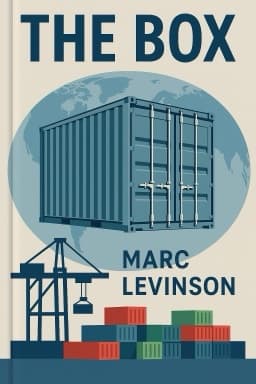
How a Simple Metal Box Changed the World: The Untold Story of Global Trade’s Silent Revolution
Discover the fascinating journey of the shipping container—an innovation that quietly reshaped economies, labor, and the very geography of global trade.

Imagine a world where moving goods across oceans was so expensive and cumbersome that many products could never reach distant markets. This was reality before the invention of the shipping container, a seemingly unremarkable steel box that revolutionized global trade.
The story begins with a visionary trucker who saw inefficiencies in how freight was handled. His insight—that the business was about moving freight, not just operating ships or trucks—sparked the idea of carrying entire standardized boxes that could be transferred seamlessly between trucks, trains, and ships.
Before containerization, docks were chaotic places where longshoremen manually loaded and unloaded cargo in dangerous conditions, often competing daily for work in a corrupt 'shape-up' system. The container disrupted this labor system, leading to fierce union resistance and massive job losses, but also to unprecedented efficiency gains.
Engineering innovations followed: ships were retrofitted with cellular holds to stack containers safely; gantry cranes and twist locks enabled rapid loading and unloading; ports transformed into sprawling terminals connected to highways and railroads. These changes shifted the economic geography of trade, with new ports rising and old ones declining.
The container accelerated globalization by enabling complex supply chains. Manufacturers could now source components worldwide and assemble products in low-cost regions, especially East Asia, fueling rapid trade growth and economic development.
However, containerization also brought unintended consequences: security challenges with smuggling and terrorism fears, environmental issues from abandoned containers, and social upheaval in waterfront communities.
Ultimately, the shipping container exemplifies how innovation reshapes industries and societies in complex ways, offering lessons on flexibility and adaptation for the future of global trade.
For a detailed account of this fascinating transformation, the book The Box by Marc Levinson offers a compelling narrative of the container’s rise and its sweeping impact on the world economy. This innovation, while mechanical in nature, tells a deeply human story of vision, resistance, and change. 1 , 2 , 3
Want to explore more insights from this book?
Read the full book summary