
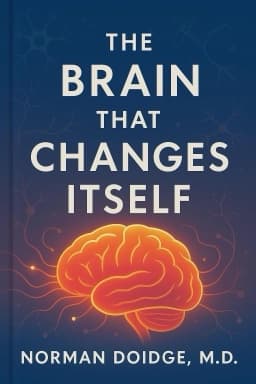
How Your Brain Can Rewire Itself: The Science and Stories Behind Neuroplasticity
Explore the fascinating science and real-life examples that prove the brain’s adaptability.

For decades, the brain was viewed as a fixed organ, with neurons hardwired in place after early development. But revolutionary research has demonstrated that the brain is plastic — capable of rewiring and reorganizing itself in response to experience and injury.
One striking example involves sensory substitution devices that enable blind individuals to 'see' through touch. By converting visual data into tactile signals on the tongue, the brain learns to interpret these signals as visual information. This challenges the idea of rigid sensory brain areas and reveals a polysensory, flexible cortex.
Stroke rehabilitation offers further proof. Patients who lost movement can regain function years later by engaging in therapies that promote use of the affected limb. Constraint-induced movement therapy forces use of the weaker side, stimulating cortical reorganization and functional recovery.
Children with learning disabilities also benefit from targeted brain exercises that strengthen weak cognitive functions. These exercises, such as complex clock reading or motor coordination drills, stimulate brain growth and improve skills dramatically.
Brain maps are dynamic, expanding with practice and shrinking with disuse. Programs like Fast ForWord leverage this by training auditory processing to improve language and reading skills in children.
Love and desire reshape the brain’s reward circuits through dopamine surges, making romantic attachment a form of addiction. Early experiences shape preferences, and addictions can hijack these pathways, illustrating both the power and vulnerability of plasticity.
Mental imagery activates motor areas and aids recovery, while brain stimulation techniques like TMS modulate activity to promote healing and cognitive enhancement.
Plasticity continues into old age, allowing cognitive improvements with training. However, it also means negative habits can become deeply wired, requiring conscious effort to change.
Understanding neuroplasticity transforms how we approach learning, healing, and emotional growth, offering a hopeful vision of lifelong brain adaptability.
References: 1 2 3 4
Want to explore more insights from this book?
Read the full book summary