
Why The Communist Manifesto Still Rocks the World: Unpacking Marx’s Revolutionary Blueprint
Dive deep into the timeless truths and fiery calls to action that keep Marx and Engels’ manifesto alive in today’s world.

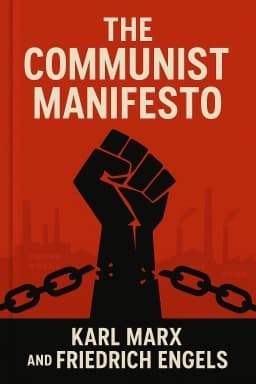
Few political texts have sparked as much debate, passion, and transformation as the Communist Manifesto. Written in 1848 by Karl Marx and Friedrich Engels, this pamphlet distilled the turbulent social dynamics of the 19th century into a powerful call for proletarian revolution. But what makes this manifesto more than just a historical artifact? Why does it continue to resonate in the 21st century?
At its heart, the manifesto reveals a sweeping narrative: human history is fundamentally the history of class struggles. From tribal communal life to feudal kingdoms, and finally to capitalist industrial society, the conflict between oppressors and oppressed has shaped every era. The manifesto’s opening lines are iconic for a reason,
The rise of the bourgeoisie—the capitalist class that emerged from feudalism—was revolutionary. They dismantled old hierarchies, created global markets, and transformed production with industry and technology. Yet, this progress came at a cost: the proletariat, or working class, was born into exploitation, forced to sell their labor under harsh conditions. The manifesto paints a vivid picture of these workers’ alienation and their growing class consciousness, which fuels the revolutionary potential to overturn capitalist domination.
Communism, as envisioned by Marx and Engels, is not about abolishing all property but specifically the bourgeois private property that enables exploitation. The manifesto outlines concrete revolutionary measures: abolition of land ownership, progressive taxation, confiscation of rebel property, centralization of credit, and free education. These steps aim to dismantle capitalist structures and lay the groundwork for a classless society.
Importantly, communism distinguishes itself from other socialist currents by its clear political stance and call for proletarian unity. It rejects reactionary and utopian socialisms that either preserve old privileges or dream without engaging material realities. Instead, communists see themselves as part of the broader working-class movement, emphasizing international solidarity—
Want to explore more insights from this book?
Read the full book summary