
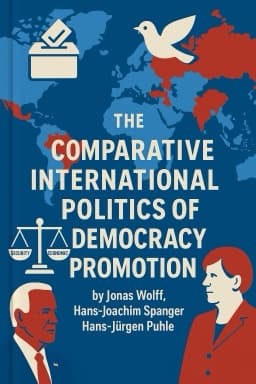
When Democracy Meets Reality: Lessons from Global Case Studies You Didn’t Expect
Surprising insights from Bolivia, Ecuador, Turkey, Pakistan, Belarus, and Russia reveal democracy promotion’s true complexities.

Democracy promotion is often discussed in abstract terms, but real-world cases reveal a far more nuanced and sometimes surprising picture. Exploring diverse contexts—from South America’s leftist governments to the political Islam surge in the Middle East and the hybrid regimes of the post-Soviet space—uncovers lessons that challenge simplistic narratives.
South America: The Leftist Turn and Its Challenges
In Bolivia and Ecuador, the election of leftist governments disrupted the neoliberal democratic order favored by many donors. These governments pursued policies reflecting popular demands but often clashed with donor economic and strategic interests. Germany responded with cooperative dialogue and development aid, while the US balanced sanctions with strategic cooperation, illustrating different political cultures at work.
Middle East: The Rise of Political Islam
Turkey and Pakistan witnessed the electoral success of Islamist parties, complicating democracy promotion efforts. Donors faced the dilemma of supporting democratic processes that empowered political forces they viewed with suspicion. Security concerns, especially post-9/11, often led to compromises, including support for autocratic measures to contain Islamist influence.
Post-Soviet Space: Hybrid Regimes in Belarus and Russia
Belarus and Russia exemplify regimes blending democratic forms with authoritarian control. Elections and referendums are used to legitimize entrenched power, posing a challenge for democracy promoters reliant on electoral benchmarks. Strategic and economic interests further complicate donor responses, leading to pragmatic engagement despite democratic setbacks.
Key Takeaways
These cases underscore that democracy promotion is deeply context-dependent and fraught with competing objectives. Donors must balance respect for sovereignty and popular will with normative commitments and strategic interests. Political culture shapes approaches, and tools must be carefully selected and calibrated.
Understanding these lessons is essential for crafting more effective and realistic democracy promotion policies in a complex world.
Want to explore more insights from this book?
Read the full book summary