
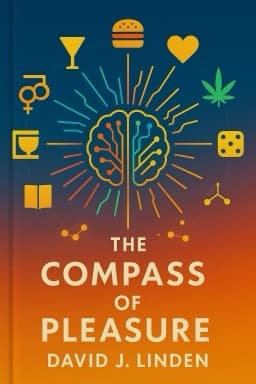
Addiction, Habits, and Hope: How Your Brain’s Compass Can Be Reset
Breaking the Cycle of Craving and Finding New Fulfillment

Breaking the Cycle of Craving and Finding New Fulfillment
Why do some habits feel impossible to break, even when we know they’re hurting us? According to David J. Linden’s 'The Compass of Pleasure,' the answer lies in the brain’s remarkable ability to learn—and sometimes, to learn the wrong lessons. Addiction is not a sign of weakness but a testament to the power of neural plasticity. When we repeatedly seek out a pleasurable experience, our brains physically change: neurons in the pleasure circuit grow new branches, and synaptic connections become stronger, binding the act to powerful memories and cues.
This is why cravings can feel so overwhelming, and why willpower alone often isn’t enough. The good news is that the brain’s plasticity cuts both ways. With conscious effort, therapy, and sometimes medication, those same neural pathways can be reshaped. Mindfulness practices, for example, have been shown to physically alter the pleasure circuit, reducing cravings and boosting resilience. New medications are being developed to target dopamine and related systems, offering fresh hope for those struggling with addiction.
Importantly, Linden’s work highlights the role of genetics and environment. Some people inherit a greater vulnerability to addiction, but no one is immune. The stories of historical figures who battled addiction remind us that this is a universal human challenge. The path to recovery is not easy, but it is always possible—and it begins with understanding the brain’s compass and learning to steer it in new directions.
References:
2
1
3
Want to explore more insights from this book?
Read the full book summary