
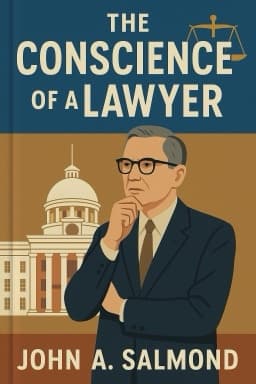
From Southern Shadows to National Spotlight: The Untold Journey of Clifford J. Durr, Civil Rights Champion
Discover how a Southern lawyer transformed from a cautious youth into a fearless defender of justice during America’s most turbulent times.

Clifford Judkins Durr’s life reads like a compelling novel, filled with contrasts and courageous turns. Born in 1899 in the heart of Alabama, his early years were steeped in the traditions and contradictions of the American South. Raised amidst the lingering shadows of Reconstruction and segregation, he was shaped by family stories, local legends, and a childhood marked by both fear and discovery. One vivid memory of a 'ghost' in the woods—later revealed as a tree scar illuminated by sunset—became a metaphor for his lifelong battle against fear and misunderstanding.
His academic journey took him far from the warm fields of Alabama to the hallowed halls of Oxford University. There, he encountered a world of rigid social codes and cultural contrasts. The English students’ icy reserve stood in stark opposition to his Southern warmth, yet this experience broadened his perspective and deepened his American identity. Traveling through Europe by bicycle and train, Durr absorbed a mosaic of cultures and political ideas, planting seeds that would later bloom into a passionate commitment to justice and equality.
Returning to the United States, Durr faced the harsh realities of early adulthood: low-paying jobs, social anxieties, and family expectations that pulled him toward traditional Southern roles like farming. But his heart was set on the law. His marriage to Virginia Foster, a woman of sharp intellect and progressive ideals, marked a turning point. Together, they navigated the challenges of a segregated society, gradually awakening to the injustices that permeated their world.
The Great Depression and the New Deal era opened new doors for Durr. Joining the Reconstruction Finance Corporation, he worked tirelessly to stabilize failing banks and restore public confidence. His legal skill and dedication earned him respect among reformers, and he embraced public service with enthusiasm, famously calling Uncle Sam the best boss he ever had. This period transformed his views on government’s role and fueled his commitment to social justice.
However, the postwar Red Scare brought new challenges. Durr’s principled opposition to loyalty oaths and political repression during McCarthyism placed him under FBI surveillance and at odds with powerful forces. Despite personal and professional risks, he stood firm, defending civil liberties and supporting those unjustly targeted. His courage during these dark times highlighted the cost of conscience but also its power to inspire.
Perhaps most remarkable was Durr’s evolution on racial justice. Influenced by Virginia’s activism and his own growing awareness, he became a vocal advocate for civil rights in Alabama. Hosting interracial dinners and defending marginalized clients, he challenged the deeply entrenched segregationist norms of the South. This activism strained family ties but underscored his belief that facing uncomfortable truths was essential for progress.
Throughout his career, Durr used the law as a tool for justice, defending poor African Americans and laborers, advocating for workers’ rights, and educating the public. His legal battles in segregated courts were fought with meticulous care and fearless resolve, often at great personal cost. Yet his resilience never waned, supported by a close circle of friends and his steadfast wife.
Facing opposition and controversy, including missed judicial appointments and family tensions, Durr remained a symbol of moral courage. His life teaches us that standing for justice often means standing alone, but that such stands leave an enduring legacy. In retirement, he returned to the family farm, reflecting peacefully on a life dedicated to confronting fear and injustice.
Clifford J. Durr’s story is a testament to the transformative power of conscience and courage. It reminds us that the ghosts of our past—fear, prejudice, and injustice—can be laid to rest through steadfast commitment to truth and justice. His legacy continues to inspire generations to face their own challenges with bravery and hope.
Sources: Encyclopedia of Alabama, Wikipedia, Regent University Archives, UNC Oral Histories 1 2 3 4
Want to explore more insights from this book?
Read the full book summary