
The Ancient Roots of Algorithms: How Old Math Powers Today’s AI Revolution
From Stone Tablets to Smartphones: The Epic Journey of Algorithms

When you tap your phone to find a restaurant, stream a song, or match with a friend, you’re relying on a legacy that stretches back thousands of years. Algorithms—those silent, step-by-step problem solvers—were not born in Silicon Valley. They are the descendants of ancient mathematicians, their wisdom encoded in stone, papyrus, and now, silicon chips.
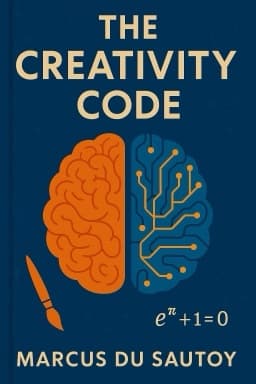
The book takes us on a journey from the dusty libraries of Alexandria to the bustling markets of Baghdad, where scholars like Euclid and Al-Khwarizmi devised clever ways to solve problems. Euclid’s algorithm for finding the greatest common divisor is still taught today, and Al-Khwarizmi’s name gave us the very word “algorithm.” These ancient recipes for logic and calculation have become the invisible engines of our digital world.
Fast forward to the present, and we find that the same principles guide everything from Google’s PageRank (which uses mathematical concepts called eigenvectors) to the algorithms that match students to schools or kidneys to patients. The journey from the Jacquard loom—an early programmable machine weaving patterns into fabric—to today’s neural networks is a story of continuity and transformation.
But algorithms are not just tools of progress; they are also sources of surprise. Sometimes, they reinforce biases hidden in their training data, or trigger unexpected events like flash crashes in financial markets. As the book and experts warn, understanding the ancient roots of algorithms helps us recognize both their power and their pitfalls.
By appreciating the long history of algorithms, we can better navigate the opportunities and challenges of the AI age. The wisdom of the ancients lives on—not just in code, but in the creative and ethical choices we make every day.
Want to explore more insights from this book?
Read the full book summary