
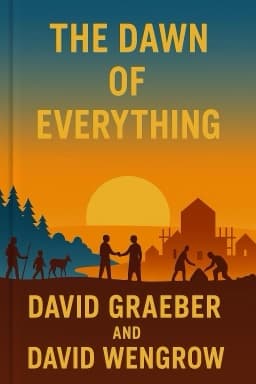
Beyond Rousseau: The Real Origins of Inequality and What We’ve Been Missing
Why Rousseau’s famous thought experiment is only part of the story—and what archaeology reveals about human societies before property.

Jean-Jacques Rousseau’s famous declaration that the first man to claim land as 'mine' founded civil society has shaped centuries of thought about inequality and governance. Yet, this powerful metaphor is only part of a much larger and more complex story.
Rousseau’s State of Nature was never meant as a historical account but a thought experiment to explore the tension between freedom and society. Recent archaeological discoveries reveal that human societies experimented with various social arrangements long before private property became dominant.
From egalitarian farming villages to indigenous cities practicing participatory democracy, the emergence of inequality was neither sudden nor universal. Instead, it unfolded through gradual social negotiations, collective decision-making, and sometimes conflict.
This nuanced understanding challenges the idea that inequality is natural or inevitable and opens space for imagining societies based on freedom, equality, and mutual respect.
By moving beyond Rousseau’s simplified narrative, we embrace a richer view of human history, one that honors diversity and complexity and informs contemporary struggles for justice.
[[0]](#__0) [[2]](#__2) [[3]](#__3)Want to explore more insights from this book?
Read the full book summary