
How Modern Monetary Theory Can Revolutionize Politics and Public Policy Today
MMT’s potential to transform political debates and enable bold economic policies.

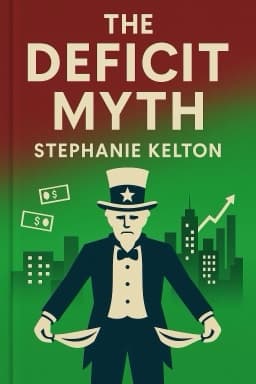
Modern Monetary Theory (MMT) is reshaping how we think about government spending, deficits, and economic possibilities. Stephanie Kelton’s The Deficit Myth introduces MMT as a nonpartisan, descriptive framework that reveals the true mechanics of monetary sovereignty.
MMT clarifies that a sovereign currency issuer like the US can never run out of money, removing false financial constraints that have long limited policy ambitions. This insight opens space for bold investments in healthcare, education, infrastructure, and climate action without the fear of deficits.
By shifting the focus from 'How will we pay for it?' to 'What are the social and economic impacts?', MMT empowers policymakers and citizens to prioritize full employment, price stability, and equitable growth.
Across the political spectrum, MMT offers a common language to discuss economic possibilities realistically and responsibly, fostering cooperation and innovation in public policy.
Embracing MMT can transform political debates and enable the creation of an economy that works for all.
For more on this transformative framework, see writings from SuperSummary, Hustle Escape, and LSE Review of Books [[0]](#__0) [[1]](#__1) [[2]](#__2).
Want to explore more insights from this book?
Read the full book summary