
Why ‘Extreme Ownership’ Will Change How You Lead Forever
Discover the revolutionary leadership mindset that Navy SEALs use to win battles and how it can transform your personal and professional life.

Leadership is often romanticized as a position of power or charisma, but 'Extreme Ownership' by Jocko Willink and Leif Babin strips leadership down to its raw essence: taking absolute responsibility for everything in your world.
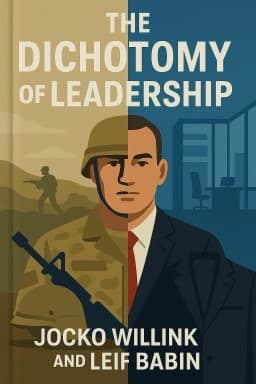
One of the most profound insights from the book is the ultimate leadership dichotomy: leaders must care deeply for their people while simultaneously leading boldly into risk. This balance is not easy. Leaders must love their team like family but be willing to send them into harm’s way when the mission demands it. This tension creates emotional burdens that only the strongest leaders can bear. Yet, embracing this dichotomy builds trust and loyalty that fuels mission success.
Another cornerstone is the principle of Extreme Ownership itself. Leaders own everything in their world — no excuses, no blaming others. But owning everything doesn’t mean doing everything. It means setting clear intent and empowering others through decentralized command. This balance prevents micromanagement, fosters initiative, and enhances team agility. For example, a commander who trusts junior leaders to plan and execute with clear guidance can focus on the big picture, driving success across multiple fronts.
Discipline is also redefined in 'Extreme Ownership.' It’s the foundation of freedom, not rigidity. A disciplined team understands standards and roles clearly, which creates the freedom to innovate and adapt when chaos erupts. The book shares stories of teams that failed when clinging too rigidly to plans and succeeded when empowered to flex and respond dynamically.
Leadership also demands courage — the courage to make hard decisions like mentoring struggling individuals or, when necessary, letting them go for the good of the team. This is not cruelty but a tough form of care that protects the whole. Leaders who avoid these decisions often harm the very people they want to help.
Finally, the book underscores the importance of being aggressively bold but never reckless. Controlled aggression builds momentum and breaks through obstacles, but unchecked recklessness leads to failure and loss. This principle teaches leaders to balance courage with caution, driving progress without unnecessary risk.
In summary, 'Extreme Ownership' provides a blueprint for leadership that is both challenging and liberating. It demands humility, courage, discipline, and empathy — qualities that, when mastered, transform not only teams but entire organizations and lives. Whether you’re leading a small team or an entire company, these principles will change how you approach leadership forever.
For those eager to dive deeper, the following blogs will explore each of these principles in detail, unpacking the lessons and sharing practical applications to bring Extreme Ownership into your daily life.
Sources: 1 , 2 , 3
Want to explore more insights from this book?
Read the full book summary