
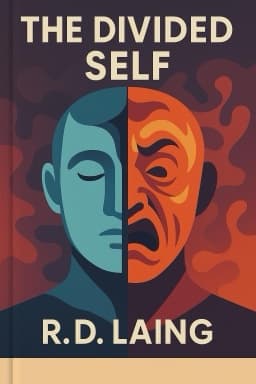
Inside the Mind’s Divide: How R.D. Laing’s 'The Divided Self' Changes Our View of Madness
A deep dive into the existential crises at the heart of mental illness and what it means to be truly sane.

Madness has long been feared and misunderstood, often reduced to mere symptoms or biological defects. Yet, R.D. Laing’s The Divided Self invites us to look beyond these surface labels and to understand the profound existential crisis that underlies mental illness.
At its core, Laing’s work reveals how individuals diagnosed with schizophrenia or psychosis experience a division within themselves—a split between their authentic being and the protective facades they construct. This split is not just psychological but deeply ontological, shaking the foundations of what it means to be a self.
Laing’s exploration of ontological insecurity highlights how fundamental fears—such as engulfment, implosion, and petrification—drive individuals to create false selves that shield them from overwhelming anxiety. These defenses, while protective, can also trap the individual in isolation and despair.
Importantly, Laing reframes psychosis as a relational breakdown rather than merely an individual pathology. The psychotic person’s reality diverges so drastically from others’ that meaningful communication becomes nearly impossible. Delusions and hallucinations emerge as attempts to convey the unspeakable, the fractured self’s plea for recognition.
Such perspectives challenge the dominant biomedical model, calling for a psychiatry that embraces empathy, dialogue, and the recognition of personhood. Healing is seen not as symptom elimination but as the gradual reintegration of the self and the restoration of relational bonds.
Laing’s work also resonates culturally, reflecting post-war existential anxieties and the search for meaning in a fragmented world. Today, his insights continue to inspire new approaches to mental health that honor the complexity and dignity of human experience.
Explore further at Want to explore more insights from this book?