
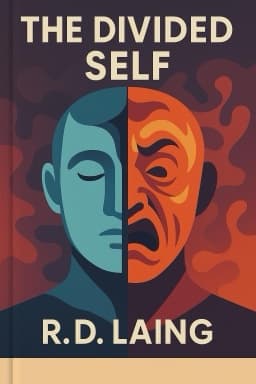
The Hidden Battle Within: How 'The Divided Self' Explains the Mysteries of Psychosis
Unraveling the complex inner world of psychosis and the path toward healing through understanding.

Psychosis remains one of the most enigmatic and frightening experiences in mental health. Yet, R.D. Laing’s The Divided Self offers a compassionate lens through which to view this hidden battle within the mind.
Laing’s thesis centers on the idea that psychosis is not simply a random breakdown but the culmination of a divided self struggling to maintain coherence amid existential insecurity. The false self, created to protect against engulfment and annihilation, eventually fractures, leading to hallucinations, delusions, and a loss of shared reality.
Understanding hallucinations and delusions as meaningful attempts to communicate inner turmoil shifts the focus from suppression to empathy. These symptoms are symbolic languages of a self in crisis, signaling the need for relational healing rather than mere diagnosis.
One poignant example is a patient who hears critical voices yet also finds comfort in them, illustrating the complex interplay of fear and hope within psychosis. Therapeutic approaches that honor this complexity foster gradual reintegration and recovery.
Laing’s existential psychiatry challenges clinicians to move beyond clinical detachment, embracing a humanistic approach that values the patient’s lived experience. This shift holds promise not only for better outcomes but for restoring dignity to those marginalized by mental illness.
For those seeking to understand psychosis beyond stigma and fear, Laing’s work remains a beacon of insight and compassion. Further reading can be found at Want to explore more insights from this book?