
Unlocking the Mind: How 'The Divided Self' Reveals the Hidden Struggles of Sanity and Madness
Discover the profound insights into mental illness and the human condition from R.D. Laing’s groundbreaking work.

In the mid-20th century, psychiatry was dominated by biological models that sought to explain mental illness through brain chemistry and genetics. Yet, Ronald D. Laing’s seminal work, The Divided Self, offered a radically different perspective—one that emphasized the existential, relational, and phenomenological dimensions of mental health. This book remains a touchstone for those seeking to understand the human experience behind psychiatric diagnoses.
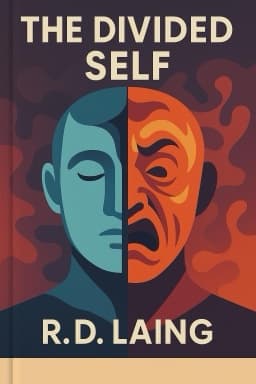
The central insight of Laing’s work is the concept of the 'divided self.' He argues that individuals experiencing psychosis or schizophrenia are not simply biologically malfunctioning but are struggling with a split within their own being—between the 'true self,' which is authentic and vulnerable, and the 'false self,' a protective mask formed to navigate a threatening world. This division is not just psychological but ontological, affecting the very nature of being and reality for these individuals.
Laing explores how this division arises in response to ontological insecurity—a fundamental anxiety about one’s existence and reality. This insecurity manifests through three core anxieties: engulfment (fear of losing oneself in another), implosion (fear of inner collapse), and petrification (fear of becoming lifeless or objectified). These fears drive the creation of the false self system, which simultaneously protects and isolates the individual, leading to profound loneliness and despair.
One of the most compelling aspects of Laing’s analysis is his view of psychosis as a relational phenomenon. He posits that psychosis represents a rupture in interpersonal recognition—where the psychotic individual’s experience of reality diverges so radically from others that mutual understanding breaks down. Delusions and hallucinations, often dismissed as meaningless symptoms, are instead seen as existential expressions of the individual’s fractured reality, attempts to communicate deep suffering.
Laing’s approach challenges the traditional psychiatric view that emphasizes symptom suppression and objective diagnosis. Instead, he advocates for empathy, therapeutic alliance, and recognizing the personhood of the patient. Healing, in this model, involves bridging the chasm within the self and between selves, fostering trust and gradual reintegration.
Today, Laing’s existential psychiatry continues to influence mental health care, reminding us that behind every diagnosis is a person struggling to be understood and whole. His work invites clinicians, caregivers, and society to embrace compassion as the foundation of healing.
For more in-depth analysis and case studies, see Want to explore more insights from this book?