
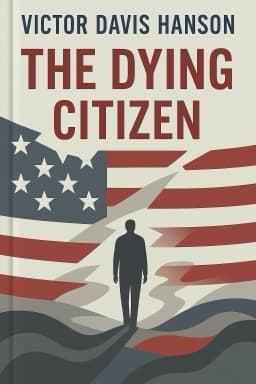
Is American Citizenship Dying? The Middle Class, Immigration, and Tribalism Unveiled
Discover how economic shifts, immigration, and identity politics threaten the very fabric of American citizenship.

The concept of citizenship has long been the cornerstone of democratic societies. Historically, citizenship was not merely a legal status but a lived reality grounded in economic independence and active participation in governance. In ancient Greece and Rome, only those who owned property and could serve in the military were granted full citizenship rights. This foundation ensured that citizens had a vested interest in the republic's stability and prosperity.
Fast forward to modern America, and the picture is alarmingly different. The middle class, once the backbone of citizenship, faces unprecedented economic challenges. Nearly half of Americans have a net worth under $10,000, burdened by mortgages, student loans, and credit card debts. Housing costs have skyrocketed, with starter homes in places like California increasing from an inflation-adjusted $143 per square foot to over $900. These financial pressures delay family formation and erode the economic independence essential for robust citizenship.
Immigration further complicates the landscape. The 1965 Hart-Celler Act transformed immigration patterns, increasing arrivals from Asia, Africa, and Latin America. The rise in undocumented immigrants, now estimated near 20 million, blurs the distinction between residents and citizens. While residency confers physical presence, citizenship entails legal rights such as voting and political participation.
Tribalism and identity politics add another layer of complexity. Loyalty to ethnic, racial, or cultural groups often supersedes allegiance to the republic. Ancient philosophers warned that when kinship trumps civic unity, constitutional republics falter. Today, political mobilization around identity fragments the national community, creating echo chambers and deepening polarization.
These forces—economic insecurity, immigration shifts, and tribalism—intersect to create a fragile citizenship. The republic’s future depends on reclaiming the civic identity that transcends economic status and group loyalties. Only through renewed commitment to shared laws, values, and responsibilities can democratic stability be preserved.
As we continue this exploration, upcoming blogs will delve into the rise of the unelected bureaucracy, constitutional reform debates, globalization’s impact, and the crisis of civic education, all critical to understanding the state of citizenship today.
Want to explore more insights from this book?
Read the full book summary