
Why Traditional IQ Tests Are Failing You (And How 'The Element' Can Save Your Potential)
Discover the truth about intelligence and why your unique talents go beyond numbers.

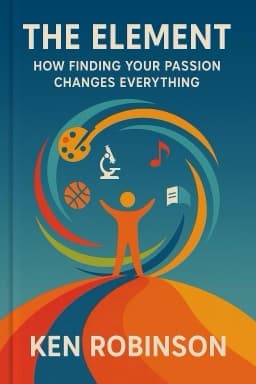
For decades, IQ tests have been considered the gold standard for measuring intelligence. But what if this view is not only incomplete but harmful? In The Element, Ken Robinson reveals that intelligence is multifaceted and cannot be distilled into a single number.
IQ tests primarily assess verbal and mathematical reasoning, ignoring other vital forms such as musical, kinesthetic, interpersonal, and intrapersonal intelligences. This narrow focus leads to many people feeling inadequate or overlooked, especially those whose talents lie outside traditional academics.
Robinson draws on the theory of multiple intelligences, which broadens our understanding of how humans think and create. Recognizing these diverse intelligences allows individuals to identify their true strengths and passions, which is essential for finding their Element.
Unfortunately, many education systems still emphasize standardized testing, which reinforces a limited view of intelligence. This approach can stifle creativity and fail to engage students who don’t fit the conventional mold.
By embracing a more inclusive definition of intelligence, educators and learners can foster environments where all talents are valued. This shift not only benefits individuals but also enriches society by unleashing a wider range of creative and innovative potential.
Ultimately, understanding that intelligence is not fixed or singular empowers you to explore your unique abilities without self-judgment. It opens the door to discovering your Element — the place where your passions and talents converge to create a fulfilling and impactful life.
Sources: 1 , 3 , 4
Want to explore more insights from this book?
Read the full book summary