
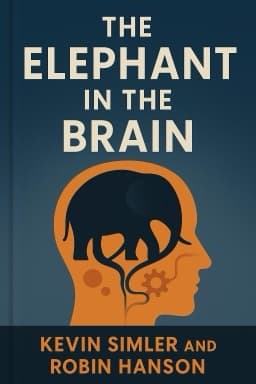
How Hidden Motives Shape the World: Lessons from The Elephant in the Brain
Why Schools, Hospitals, and Charities Aren’t What They Seem

Why Schools, Hospitals, and Charities Aren’t What They Seem
We like to think of our social institutions as pure, rational engines of progress. Schools teach, hospitals heal, charities help. But as Robin Hanson and Kevin Simler show in The Elephant in the Brain, the reality is far more complex—and much more interesting. Institutions are not just tools for achieving stated goals; they are arenas for signaling, status-seeking, and social maneuvering.
Take education. While we claim school is about learning, the real value often lies in signaling intelligence, diligence, and conformity. Diplomas are badges, not just certificates of knowledge. This explains why so much of the educational process is ritualized, why employers care about degrees rather than skills, and why reforms that focus on curriculum often miss the point. 2
Medicine: More Than Healing
Hospitals and clinics should be about health—but much of medical care is about reassurance, social support, and displaying care for loved ones. This is why people seek unnecessary tests or treatments, why doctors sometimes prescribe placebos, and why healthcare spending doesn’t always correlate with health outcomes. The social value of medicine often outweighs its practical value. 1
Charity: The Status Game
Philanthropy is supposed to be selfless, but donations often increase when giving is public. Naming rights, donor lists, and gala events all serve to signal generosity and earn status. The result is a system where the appearance of helping may matter as much as the help itself. 4
Implications for Reform
If we want to improve institutions, we need to address the real motives behind them. Reforms that ignore signaling, status, and social games are doomed to fail. Instead, we should design systems that harness these motives for good—rewarding genuine achievement, encouraging transparency, and making it easier to do the right thing for the right reasons.
Understanding the hidden motives in institutions isn’t just about cynicism. It’s about wisdom—seeing the world as it is, so we can make it better.
Want to explore more insights from this book?
Read the full book summary