
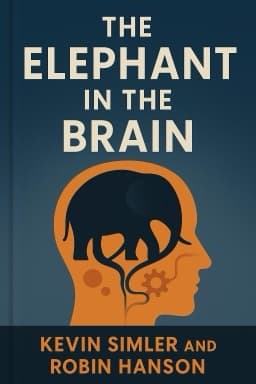
Unlocking Self-Knowledge: What The Elephant in the Brain Teaches About Seeing Yourself Clearly
How Facing Your Hidden Motives Can Change Your Life

How Facing Your Hidden Motives Can Change Your Life
How well do you really know yourself? Most of us like to think we’re honest and self-aware, but The Elephant in the Brain shows that our motives are often hidden—even from ourselves. The good news is that recognizing these hidden motives is the first step to wisdom, compassion, and personal growth.
Self-deception is an evolutionary adaptation: by believing our own stories, we can more convincingly persuade others of our innocence or virtue. But this comes at a cost: we become blind to our own biases, weaknesses, and true desires. To break this cycle, we need humility—the willingness to confront uncomfortable truths—and reflection, the practice of examining our thoughts and actions honestly. 1
Practical Steps to Greater Self-Knowledge
- Keep a journal: Write down your actions and ask, “What was I really hoping to achieve?”
- Seek honest feedback: Ask trusted friends to point out your blind spots.
- Practice mindfulness: Notice your thoughts and feelings without judgment.
- Study your own rationalizations: When you catch yourself making excuses, look deeper.
By practicing these habits, you can begin to see the elephant in your brain—not as an enemy, but as a companion on the journey to understanding.
Compassion and Growth
Recognizing hidden motives in yourself makes it easier to spot them in others—with empathy, not judgment. Everyone struggles with self-deception. By cultivating compassion, you can build stronger relationships, make wiser choices, and live more authentically.
True self-knowledge isn’t about perfection. It’s about growth—the ongoing process of seeing yourself more clearly, forgiving your flaws, and striving to become your best self.
Want to explore more insights from this book?
Read the full book summary