
Why Your Brain Is a Master of Social Camouflage (and What It Means for Your Life)
How Evolution Taught Us to Hide in Plain Sight

How Evolution Taught Us to Hide in Plain Sight
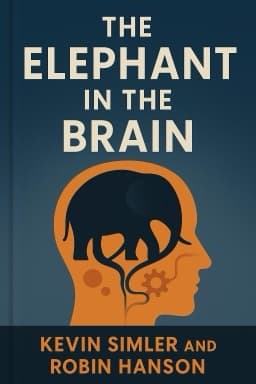
Every day, you navigate a world full of unspoken rules and silent judgments. Why do you smile at a coworker you secretly dislike? Why do you follow rituals in meetings, classrooms, or family gatherings—even when they seem pointless? The answer, according to The Elephant in the Brain, is social camouflage: the art of hiding your real motives to fit in, stand out, or avoid trouble.
Evolution didn’t just make us smart; it made us savvy. In the arms race of social living, those who could signal loyalty, competence, or virtue—while hiding ambition, rivalry, or self-interest—thrived. This is why, as Robin Hanson and Kevin Simler explain, our brains are expert at managing impressions. We’re not just lying to others; we’re lying to ourselves, because the best lies are the ones we believe.
The Subtle Power of Norms and Meta-Norms
Social camouflage relies on a web of norms—rules about what’s acceptable—and meta-norms, which are rules about enforcing those rules. If you break a norm quietly, you might get away with it. But if everyone knows you broke it, and everyone knows that everyone knows, punishment becomes inevitable. This is why plausible deniability is so effective: as long as there’s doubt, the group can pretend nothing happened.
Gossip is the lifeblood of this system. Far from being trivial, gossip coordinates group responses to norm violations, spreads reputational information, and helps enforce social order. It’s why we care so much about what others say behind our backs, and why we’re careful to maintain appearances—even when our private behavior tells a different story. 3
Cheating with Style: The Art of Discretion
Cheating—bending or breaking the rules—is a universal human behavior. But the most successful cheaters are those who do it with discretion. Whether it’s jaywalking, tax evasion, or skipping out on chores, people find ways to exploit loopholes, use pretexts, or keep their actions just ambiguous enough to avoid blame. The brain’s cheater-detection module is always at work, but so is its capacity for rationalization and excuse-making. 1
This arms race between cheaters and enforcers drives innovation in both detection and deception. It also explains why so many social rituals seem pointless: they’re actually clever ways to signal conformity and avoid suspicion.
Implications for Relationships and Institutions
Social camouflage isn’t just a personal skill—it shapes entire institutions. Schools, hospitals, and charities are built as much for signaling and reputation as for learning, healing, or helping. The more we recognize the role of hidden motives, the better we can understand why reforms often fail, why organizations are resistant to change, and why people behave in ways that seem irrational on the surface. 4
Recognizing social camouflage can help us build better relationships, spot manipulation, and create environments where honesty and trust are possible. But it requires humility: to admit that we, too, are masters of disguise.
Conclusion: Embracing the Elephant
Seeing the elephant in the brain isn’t about becoming cynical or distrustful. It’s about becoming wiser, more empathetic, and more skillful in the art of human connection. By understanding the patterns of social camouflage, we can choose when to play along, when to push back, and how to live more authentically—even in a world built on hidden motives.
Want to explore more insights from this book?
Read the full book summary