
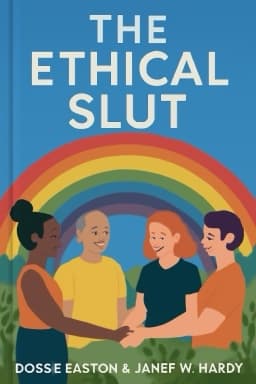
Why Everyone’s Talking About ‘The Ethical Slut’ – And Why You Should Too
A Deep Dive Into the Book That Changed How We Talk About Sex, Love, and Freedom

When ‘The Ethical Slut’ first hit the shelves in the late 1990s, it was a shot across the bow of sexual conservatism. Written by Dossie Easton and Janet W. Hardy, two trailblazers in the worlds of sex education and alternative relationships, the book was among the first to unapologetically reclaim the word ‘slut’ as a badge of honor—and to offer a practical, compassionate guide to living a life of sexual abundance and integrity. Today, its reputation as the ‘bible of polyamory’ is well-earned, but its influence stretches far beyond the poly community. It’s a book about honesty, courage, and self-acceptance, and its lessons are just as relevant if you’re monogamous, single, or somewhere in between.
At its core, ‘The Ethical Slut’ argues that love is not a zero-sum game. The more you share, the more you have. This radical idea challenges the cultural myth that intimacy is scarce and must be hoarded or protected at all costs. Instead, Easton and Hardy invite readers to imagine a world where jealousy is a teacher, not an enemy; where communication is the bedrock of every relationship; and where boundaries are not barriers, but bridges to deeper connection.
The book is refreshingly practical, filled with exercises, real-life stories, and affirmations that encourage self-reflection and growth. It’s not just a manifesto—it’s a toolkit. You’ll find advice on everything from negotiating relationship agreements to managing time and energy across multiple partners, to confronting shame and reclaiming your desires. The authors don’t shy away from the hard stuff, either: jealousy, conflict, and social stigma are all addressed with empathy and wisdom.
‘The Ethical Slut’ has also sparked controversy. Critics have accused it of promoting promiscuity or undermining traditional values. But for many, the book is a lifeline—a reminder that there are as many ways to love as there are people, and that each path is worthy of respect. As mainstream interest in nonmonogamy grows, the book’s influence is only expanding. Whether you’re curious about polyamory, struggling with jealousy, or just want to be a better communicator, there’s something in these pages for you.
Ultimately, the legacy of ‘The Ethical Slut’ is one of courage and compassion. It’s about daring to ask, ‘What do I really want?’ and then building a life that honors that truth. In a world hungry for connection, its message is more vital than ever.
References: Want to explore more insights from this book?